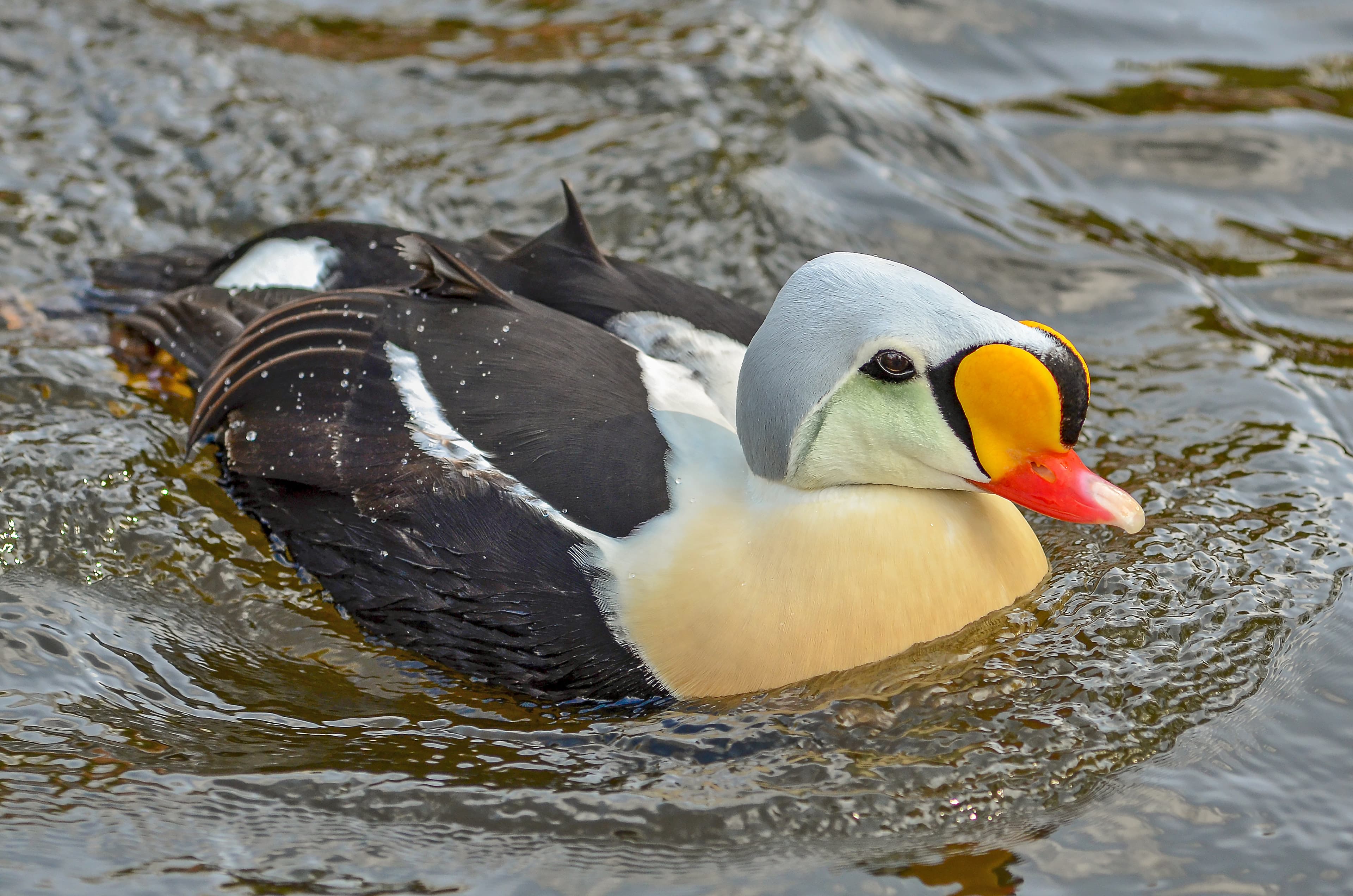
King Eider
Image: <a href="//commons.wikimedia.org/wiki/User:Fiorellino" title="User:Fiorellino">Olaf Oliviero Riemer</a> (CC BY-SA 3.0)
NameKing Eider
Common NameKing Eider
Scientific NameSomateria spectabilis
FamilyAnatidae
Wingspan (cm)94
Length (cm)60
Weight (g)1800
Plumage DetailsAdult males have a striking pale blue-gray head with a prominent orange frontal shield (knob) on the bill, bordered by black. There is a distinctive greenish patch on the nape. The breast is white, contrasting with a black back and flanks, and white patches are visible on the wings. The bill is red-orange.
Vocalization / CallMales produce a soft, cooing 'hoo-hoo-hooo' sound during courtship. Females have a harsh, croaking call.
Primary Dietcarnivore
Primary Habitatscoastal waters, tundra, marine
Conservation Statusleast-concern
Geographic RangeBreeds in the Arctic regions of North America, Europe (e.g., Svalbard), and Asia (Siberia). Winters in subarctic and temperate marine waters, including the Bering Sea, North Atlantic, and Great Lakes.
Identifying Featureslarge orange frontal shield on bill (male), pale blue-gray head (male), greenish nape patch (male), white breast and black back (male), red-orange bill (male)
Description
The King Eider is a large sea duck known for its distinctive appearance, especially the male with its colorful head and bill. These birds are strong divers, foraging for marine invertebrates in cold Arctic waters. They spend most of their lives in coastal marine environments, breeding on Arctic tundra.