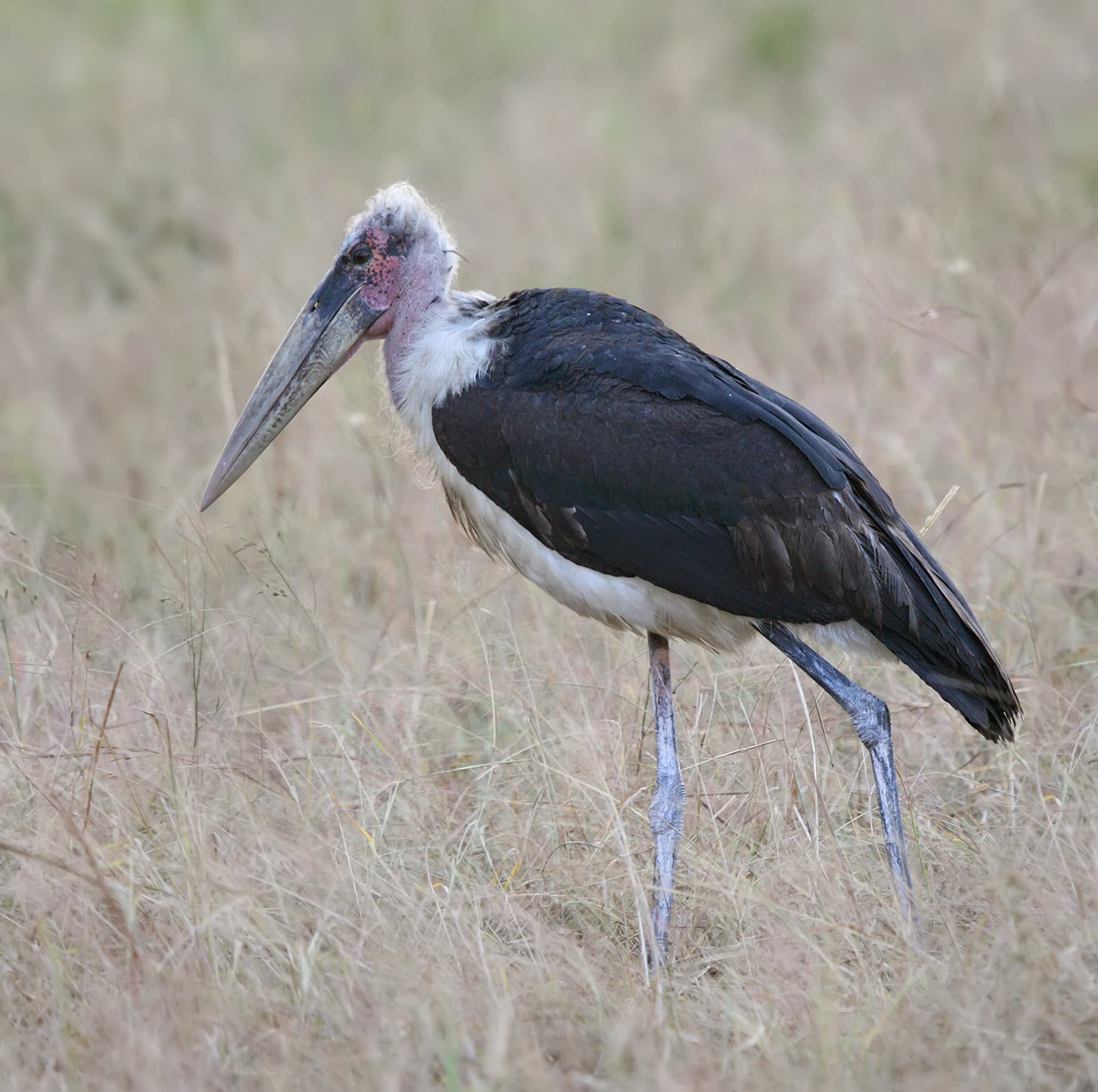
Marabou Stork
Image: Muhammad Mahdi Karim Facebook The making of this document was supported by Wikimedia CH. (Submit your project!) For all the files concerned, please see the category Supported by Wikimedia CH. العربية ∙ বাংলা ∙ čeština ∙ Deutsch ∙ English ∙ Esperanto ∙ español ∙ français ∙ galego ∙ हिन्दी ∙ magyar ∙ italiano ∙ 日本語 ∙ македонски ∙ Nederlands ∙ português do Brasil ∙ rumantsch ∙ русский ∙ sicilianu ∙ slovenščina ∙ தமிழ் ∙ українська ∙ 中文 ∙ +/− (GFDL 1.2)
Description
The Marabou Stork is a massive wading bird characterized by its bare head and neck, a large wedge-shaped bill, and a prominent gular sac. It is often seen scavenging for food, displaying a somewhat hunched posture on the ground and a slow, deliberate flight with its long legs trailing behind.