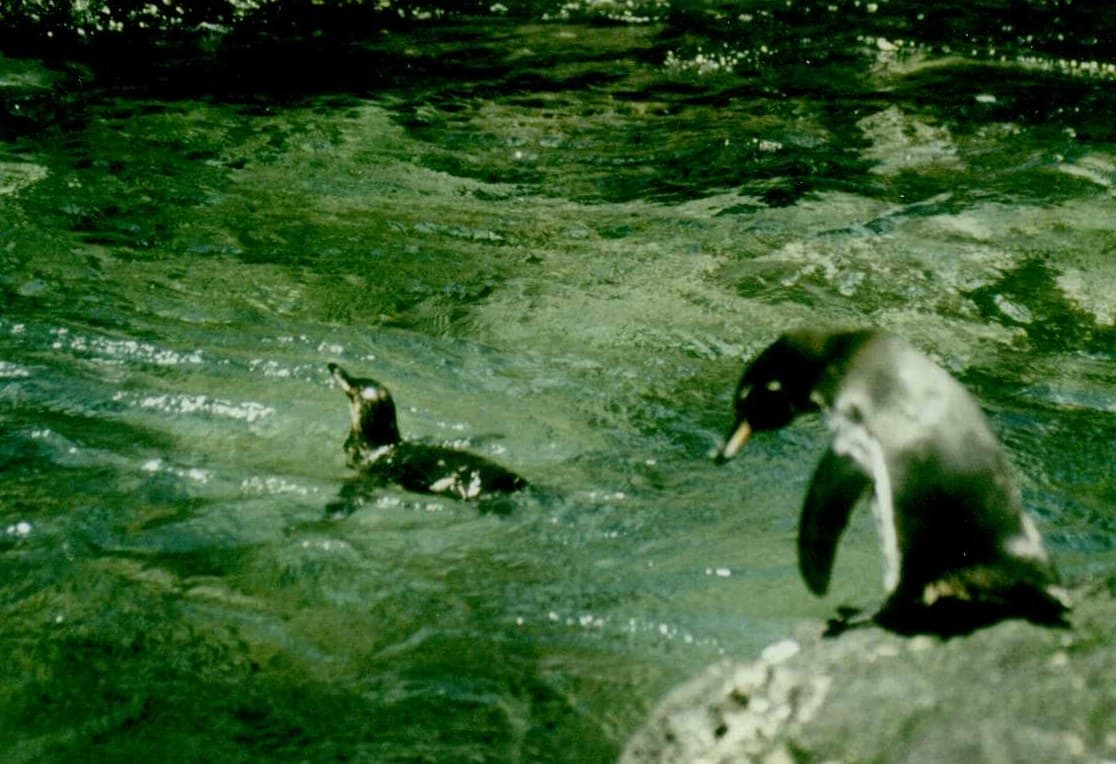
Galapagos Penguin
Image: self. Trabajo propio (Public domain)
NameGalapagos Penguin
Common NameGalapagos Penguin
Scientific NameSpheniscus mendiculus
FamilySpheniscidae
Wingspan (cm)45
Length (cm)50
Weight (g)2150
Plumage DetailsBlack upperparts and head, with white underparts. A thin white line extends from behind the eye, curving down to meet a single black band that crosses the chest. A second black band runs from the throat down the sides. The bill is dark with a pale patch at the base of the lower mandible.
Vocalization / CallVocalizations include braying calls, similar to a donkey, used for communication between mates and during territorial displays. They also produce softer chirps and whistles.
Primary Dietpiscivore
Primary Habitatscoastal marine, rocky shores
Conservation Statusendangered
Geographic RangeEndemic to the Galapagos Islands, primarily found on the western islands of Fernandina and Isabela, with smaller populations on Floreana, Santiago, and Bartolomé.
Identifying Featuressmall size (smallest of the banded penguins), black upperparts and white underparts, distinctive white line from behind the eye curving to a single black chest band, dark bill with pale patch at base of lower mandible, only penguin species found in the tropics/Galapagos Islands
Description
The Galapagos Penguin is a small, agile penguin endemic to the Galapagos Islands, making it the only penguin species found north of the equator. It is well-adapted to tropical waters, foraging in the cool Humboldt Current and seeking shade on land to regulate its body temperature.