Budgerigar
Image: betorquato (cc-by-nc)
NameBudgerigar
Common NameBudgerigar
Scientific NameMelopsittacus undulatus
FamilyPsittaculidae
Wingspan (cm)25
Length (cm)18
Weight (g)35
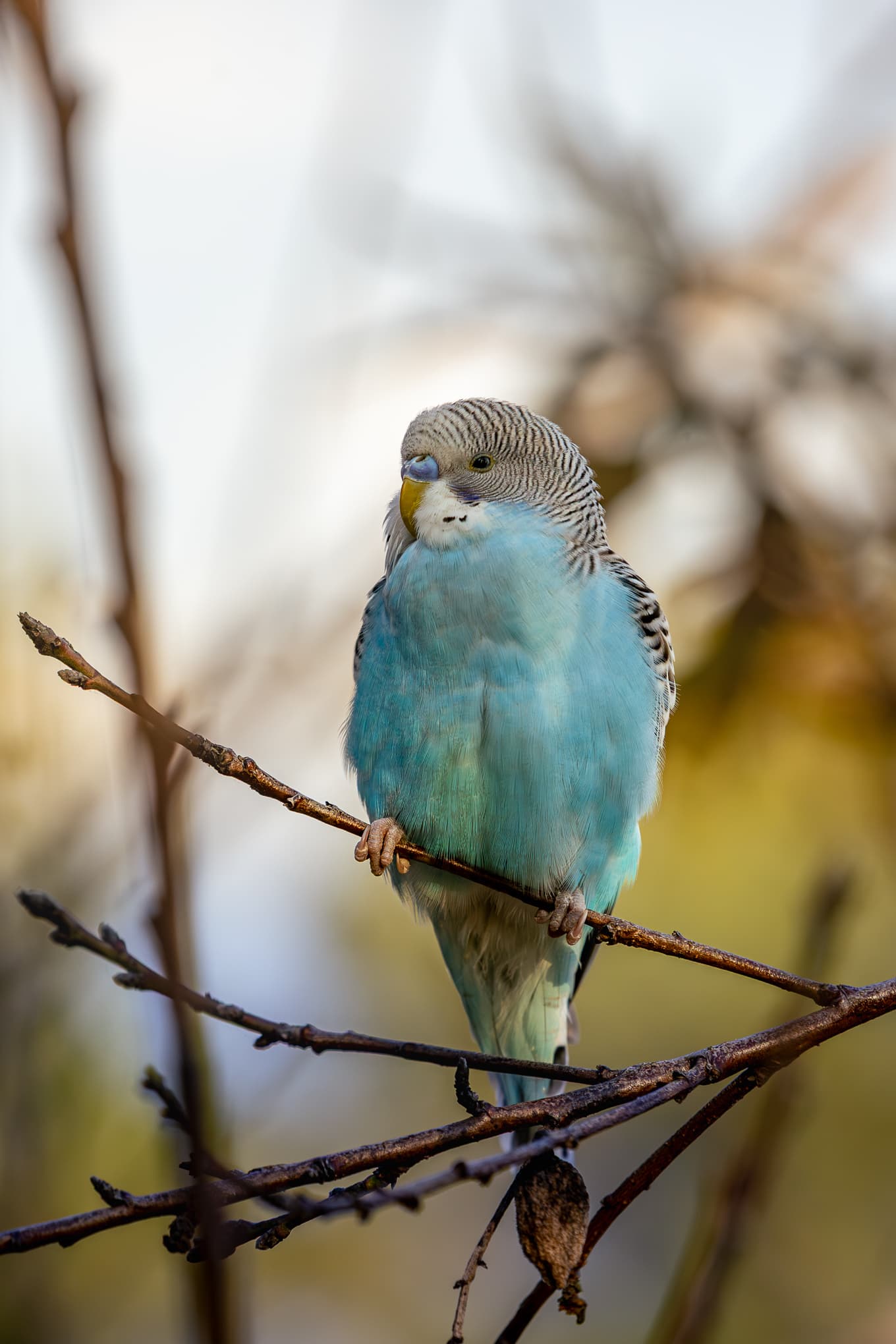
Plumage DetailsThe bird in the image displays a blue body plumage, with a pale blue to white belly. Its head, nape, and upper back are marked with fine black undulating stripes on a greyish-white background. It has small black spots on its cheeks and a bright yellow beak with a blue cere, indicating it is likely a male.
Vocalization / CallBudgerigars produce a variety of chirps, chattering sounds, and warbling calls. They are known for their ability to mimic sounds and can be quite vocal, especially when in groups.
Primary Dietgranivore
Primary Habitatsgrassland, shrubland, open woodland
Conservation Statusleast-concern
Geographic RangeNative to arid and semi-arid regions of inland Australia, where they are nomadic, moving to areas with available food and water. Feral populations exist in some parts of the world due to escaped pets.
Identifying FeaturesSmall size, Undulating black markings on head, nape, and wings, Short, pointed tail, Bright yellow beak, Cere color (blue in males, brown/white in females for wild type; varies in mutations)
Description
The Budgerigar is a small, long-tailed parrot native to Australia, known for its social nature and ability to mimic sounds. Wild birds are typically green and yellow, while domesticated varieties, like the blue one pictured, come in a wide array of colors. They are highly active and often seen in large flocks in their natural habitat.