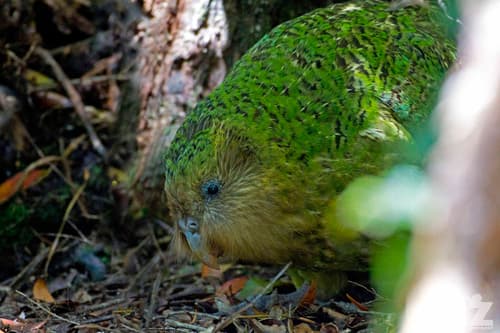
Kakapo
NameKakapo
Common NameKakapo
Scientific NameStrigops habroptilus
FamilyStrigopidae
Wingspan (cm)0
Length (cm)61
Weight (g)2500
Plumage DetailsThe plumage is predominantly moss-green, mottled with black and brown on the back, providing excellent camouflage in its forest habitat. The underside is yellowish-green, and it features a distinctive facial disc of fine, soft feathers, giving it an owl-like appearance.
Vocalization / CallKakapos have a diverse vocal repertoire, including a loud, low-frequency 'boom' call used by males to attract mates, a high-pitched 'ching' call, and various squawks, screeches, and growls for communication.
Primary Dietomnivore
Primary Habitatsforest, subalpine scrub, coastal areas
Conservation Statuscritically-endangered
Geographic RangeEndemic to New Zealand, the Kakapo is currently restricted to several predator-free offshore islands, including Anchor Island, Chalky Island, Whenua Hou (Codfish Island), and Little Barrier Island (Hauturu).
Identifying FeaturesFlightless, Nocturnal, Large and heavy parrot, Moss-green plumage with dark mottling, Owl-like facial disc, Prominent vibrissae (whiskers) around the beak, Strong, short legs and large feet
Description
The Kakapo is a large, flightless, nocturnal parrot endemic to New Zealand, known for its distinctive moss-green plumage and owl-like facial disc. It is the world's only flightless parrot and the heaviest parrot species, moving by walking, climbing, and occasionally parachuting from trees.