Turkey Vulture
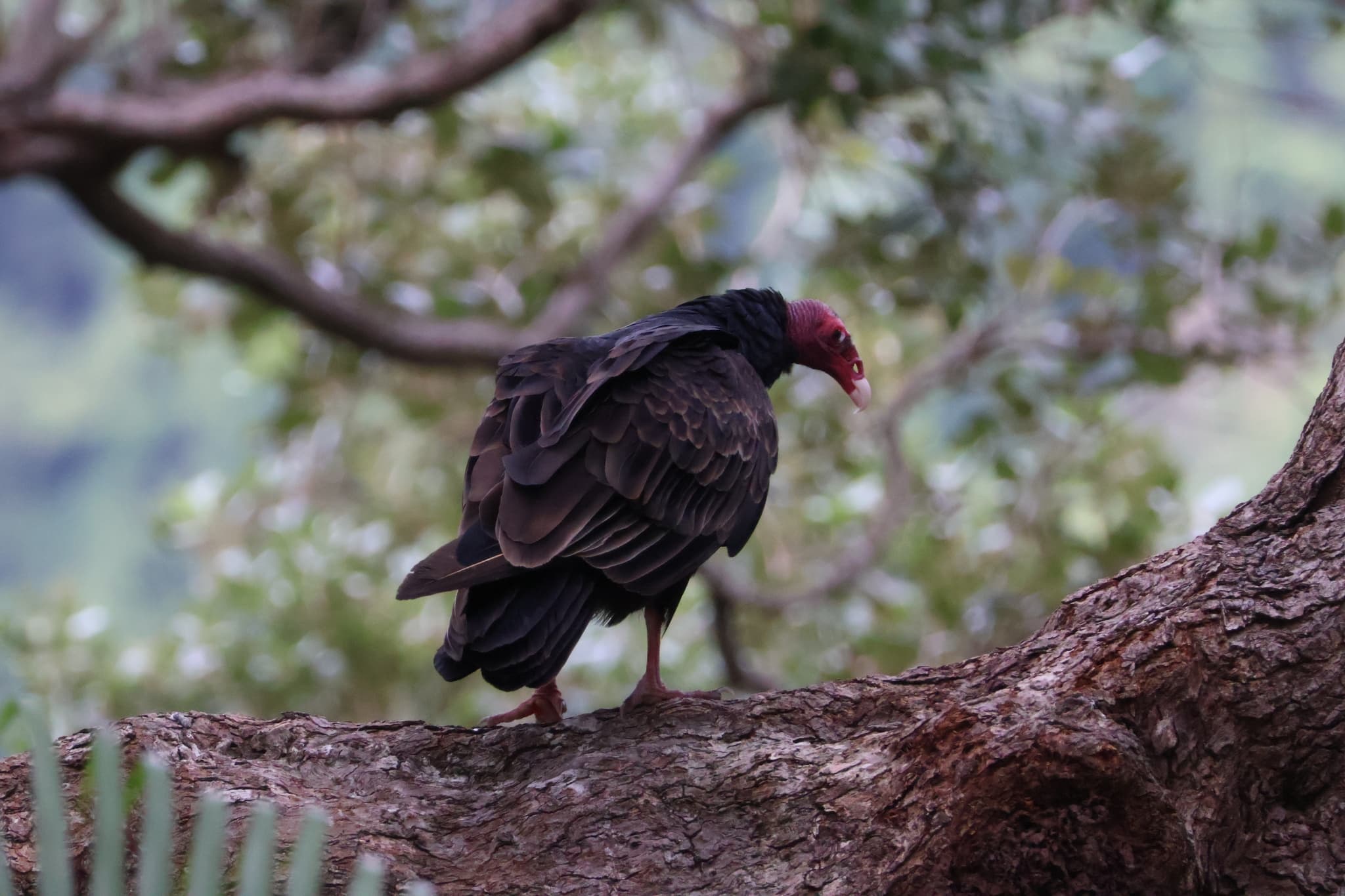
Image: Isis I. Castro Alberto (cc-by)
NameTurkey Vulture
Common NameTurkey Vulture
Scientific NameCathartes aura
FamilyCathartidae
Wingspan (cm)170
Length (cm)70
Weight (g)1400
Plumage DetailsAdults have dark brown to black body plumage, which can appear silvery-gray on the underside of the flight feathers in flight. The head and neck are bare, wrinkled, and reddish-pink, contrasting with a pale, hooked bill. Juveniles have a grayish head.
Vocalization / CallTurkey Vultures lack a syrinx, so they do not produce true songs. Their vocalizations are limited to a variety of hisses and grunts, typically heard when they are disturbed or competing for food.
Primary Dietcarnivore
Primary Habitatsforest, grassland, shrubland, desert, mountains, agricultural land, urban areas
Conservation Statusleast-concern
Geographic RangeFound throughout the Americas, ranging from southern Canada, across the United States, Mexico, Central America, and extensively through South America down to Tierra del Fuego.
Identifying Featuresbare red head (adults), dark brown/black plumage, pale, hooked bill, long, broad wings held in a dihedral (V-shape) during flight, teetering flight pattern, scavenging behavior
Description
The Turkey Vulture is a large scavenger characterized by its dark brown to black plumage and a distinctive bare, red head. It is frequently observed soaring gracefully on thermal currents, often with a noticeable teetering motion, as it scans the ground for carrion.