Scarlet Tanager
Image: <a href="//commons.wikimedia.org/wiki/User:Rhododendrites" title="User:Rhododendrites">Rhododendrites</a> (CC BY-SA 4.0)
NameScarlet Tanager
Common NameScarlet Tanager
Scientific NamePiranga olivacea
FamilyCardinalidae
Wingspan (cm)27
Length (cm)17
Weight (g)30
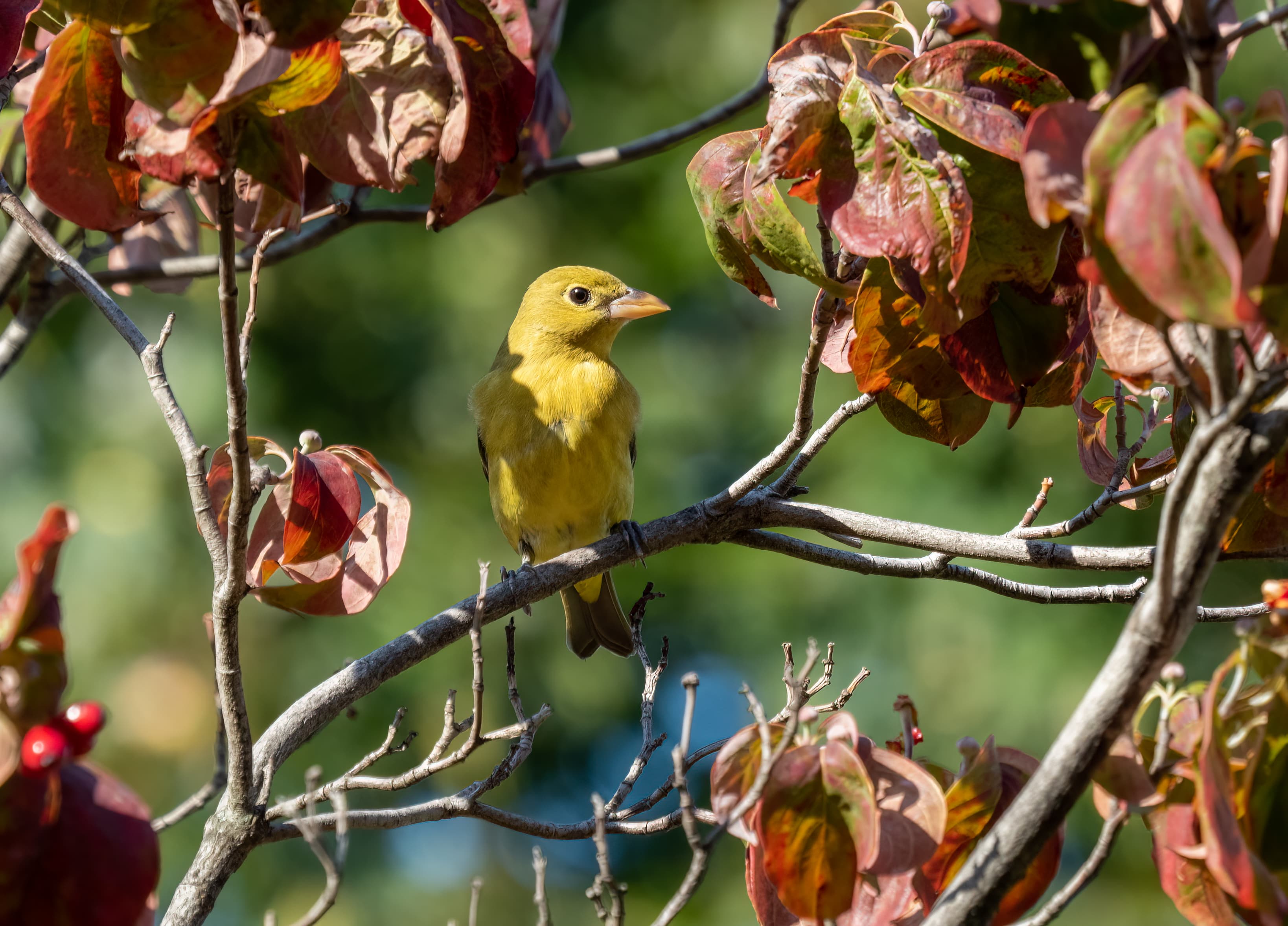
Plumage DetailsBreeding males are unmistakable with their brilliant scarlet red body and contrasting jet-black wings and tail. Females and non-breeding males, like the one pictured, are yellowish-olive on the head and body, with dusky or olive-brown wings and tail. They have a pale, thick bill.
Vocalization / CallTheir most common call is a distinctive, dry 'chick-burr' or 'chip-churr'. The song is a series of short, hoarse, robin-like phrases, often described as sounding like a robin with a sore throat.
Primary Dietomnivore
Primary Habitatsdeciduous forest, mixed forest, woodlands, parks, cemeteries
Conservation Statusleast-concern
Geographic RangeBreeds across eastern North America, from southern Canada south to the southeastern United States. Winters in northern South America, primarily in the Andean foothills and Amazon basin.
Identifying FeaturesBrilliant scarlet red body with black wings and tail (breeding male), Yellowish-olive body with dusky wings and tail (female/non-breeding male), Thick, pale, conical bill, Distinctive 'chick-burr' call, Prefers forest canopy
Description
The Scarlet Tanager is a medium-sized songbird known for its striking sexual dimorphism. Breeding males are brilliant scarlet with black wings, while females and non-breeding males are yellowish-olive. These birds typically forage high in the canopy of deciduous forests, primarily consuming insects and fruits.