Little Penguin
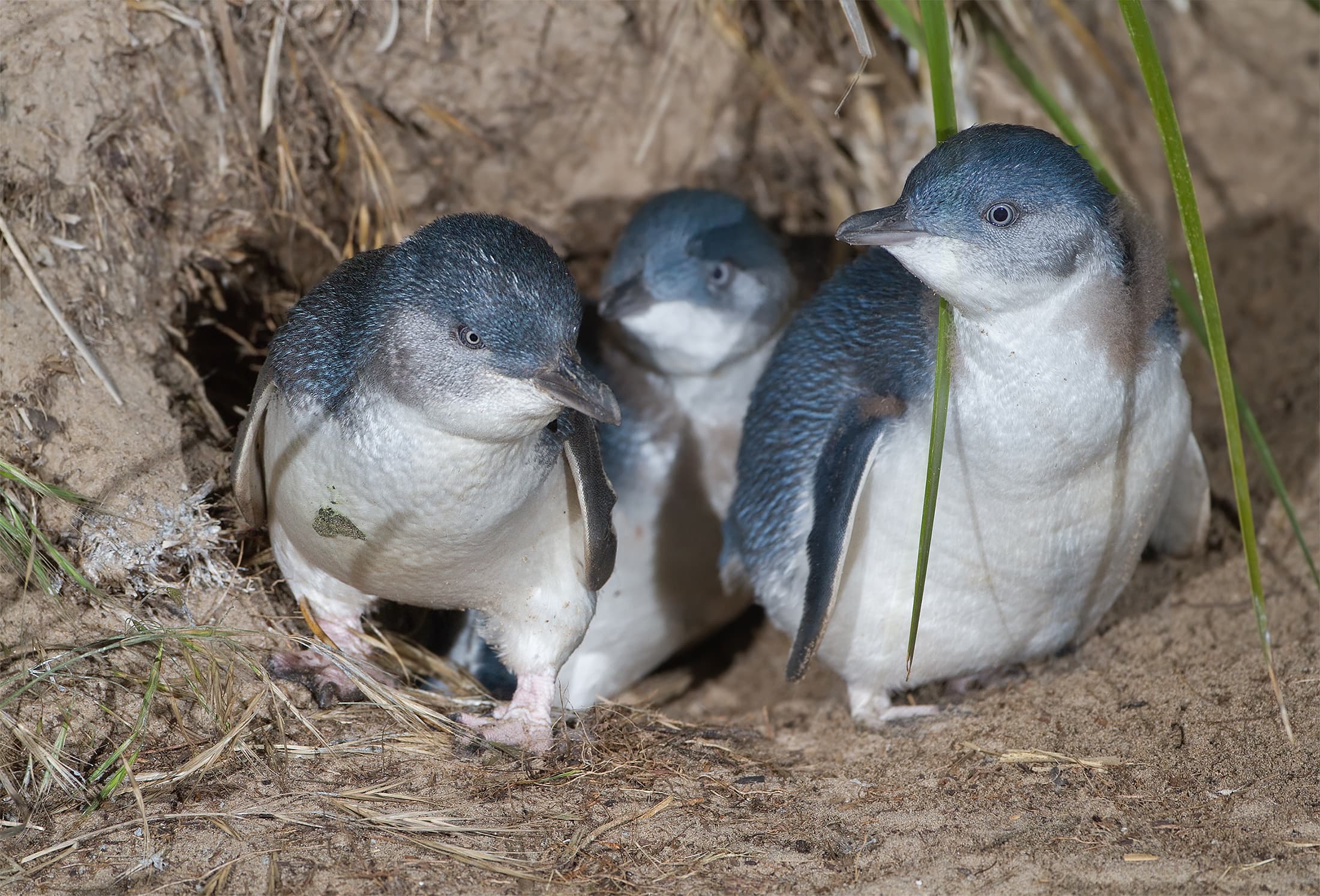
Image: <a href="//commons.wikimedia.org/wiki/User:JJ_Harrison" title="User:JJ Harrison">JJ Harrison</a> (<a rel="nofollow" class="external free" href="https://www.jjharrison.com.au/">https://www.jjharrison.com.au/</a>) (CC BY-SA 3.0)
NameLittle Penguin
Common NameLittle Penguin
Scientific NameEudyptula novaehollandiae
FamilySpheniscidae
Wingspan (cm)33
Length (cm)33
Weight (g)1100
Plumage DetailsAdults have dark slate-blue to indigo-blue upperparts, including the head, back, and flippers, contrasting sharply with pure white underparts from the chin to the vent. The bill is dark grey, and the eyes are pale.
Vocalization / CallLittle Penguins produce a variety of vocalizations, including loud, trumpeting calls, squawks, growls, and braying sounds, particularly when at their breeding colonies or when communicating with mates and chicks.
Primary Dietpiscivore
Primary Habitatscoastal waters, rocky shores, sandy beaches, offshore islands
Conservation Statusleast-concern
Geographic RangeFound along the southern coasts of Australia, including Tasmania, and throughout New Zealand.
Identifying FeaturesSmallest penguin species, Blue-grey upperparts and white underparts, Nocturnal on land, Burrow nesting behavior, Dark bill and pale eyes
Description
The Little Penguin is the smallest species of penguin, characterized by its distinctive blue-grey plumage and white underparts. These nocturnal birds are often seen exiting burrows at dusk to forage at sea, returning before dawn.