Horned Lark
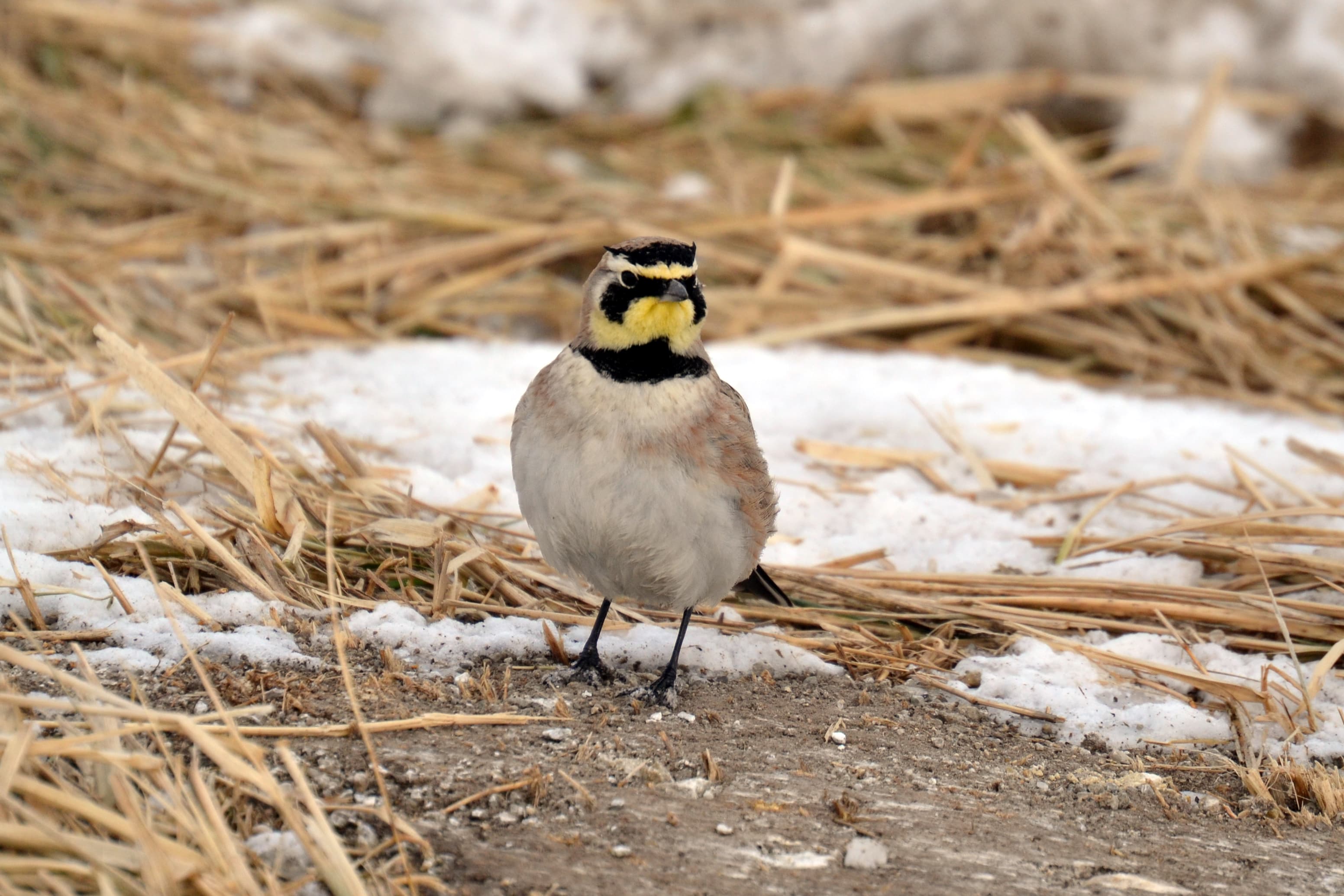
Image: <a rel="nofollow" class="external text" href="https://www.flickr.com/people/104269801@N02">Andrew C</a> (CC BY 2.0)
NameHorned Lark
Common NameHorned Lark
Scientific NameEremophila alpestris
FamilyAlaudidae
Wingspan (cm)29.5
Length (cm)18
Weight (g)38
Plumage DetailsMales feature a striking yellow face with a prominent black mask extending from the bill to behind the eye, a black bib on the throat, and small black feather tufts (horns) on the crown. The crown itself is black, while the back and wings are streaky brown. Underparts are whitish, often with a buffy wash on the flanks. Females and immatures have a similar pattern but are generally duller.
Vocalization / CallIts song is a high-pitched, tinkling series of notes, often delivered during a display flight. Common calls include a sharp, high-pitched 'tseep' or 'tsee-tsee' sound.
Primary Dietomnivore
Primary Habitatsgrassland, tundra, agricultural fields, prairie, deserts, open country
Conservation Statusleast-concern
Geographic RangeThe Horned Lark has a very broad distribution, breeding across much of North America, from Alaska and Canada south through the United States and into central Mexico. It is also found in parts of Eurasia and North Africa.
Identifying Featuresblack 'horns' on head, yellow face with black mask, black bib, ground-dwelling behavior, streaky brown back
Description
The Horned Lark is a small, ground-dwelling songbird known for its distinctive black and yellow face pattern and small feather tufts, or 'horns,' on its head. It typically forages on open ground, often in sparse vegetation, agricultural fields, or tundra environments, blending in with its surroundings.