Satin Bowerbird
NameSatin Bowerbird
Common NameSatin Bowerbird
Scientific NamePtilonorhynchus violaceus
FamilyPtilonorhynchidae
Wingspan (cm)50
Length (cm)30
Weight (g)217.5
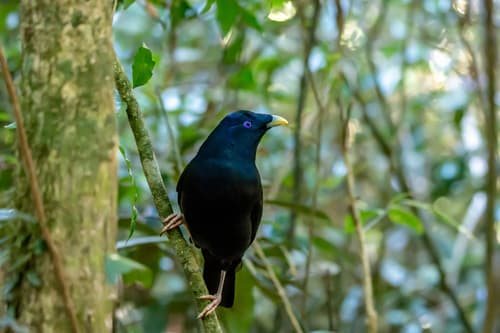
Plumage DetailsAdult males display a glossy, iridescent violet-blue to blue-black plumage, particularly vibrant in good light. They have bright violet-blue eyes and a yellowish-white, slightly hooked beak. Females and immature males are duller, typically olive-green to brownish-green with a scaly pattern on the underparts and blue eyes.
Vocalization / CallTheir calls are varied and complex, including harsh rasps, hisses, churring, and mimicry of other birds and sounds from their environment, often incorporating sounds like chainsaws or other bird calls.
Primary Dietomnivore
Primary Habitatsrainforest, wet sclerophyll forest, eucalyptus forest, suburban gardens
Conservation Statusleast-concern
Geographic RangeEndemic to eastern Australia, found along the coastal regions from southeastern Queensland through New South Wales to Victoria.
Identifying FeaturesIridescent violet-blue/blue-black plumage (males), Bright violet-blue eyes (males), Yellowish-white beak (males), Elaborate bower construction (males), Olive-green plumage (females/immature males)
Description
The male Satin Bowerbird is renowned for its striking iridescent blue-black plumage and its elaborate bower-building behavior to attract mates. Females are duller green-brown. This species is endemic to eastern Australia.