Little Bustard
NameLittle Bustard
Common NameLittle Bustard
Scientific NameTetrax tetrax
FamilyOtididae
Wingspan (cm)110
Length (cm)42.5
Weight (g)900
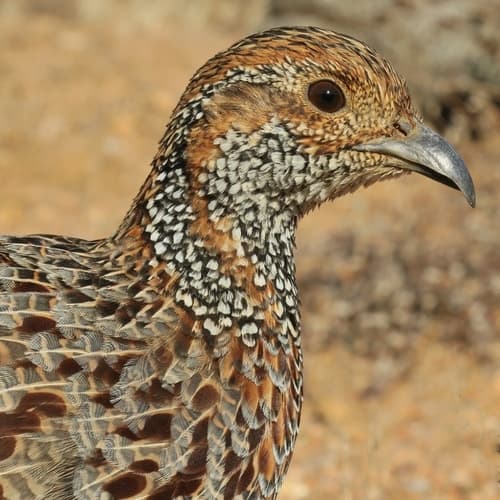
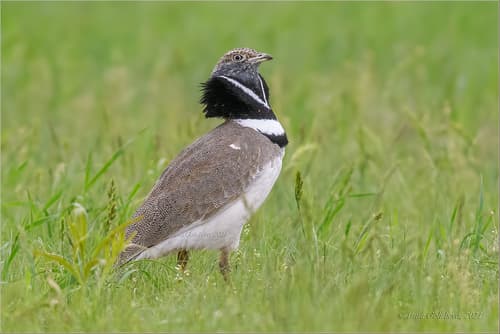
Plumage DetailsMales in breeding plumage have a grey head, a black neck with two prominent white bands (one narrow, one broad), and a black ruff. Their upperparts are sandy-brown with fine black vermiculations, and underparts are white. Females and non-breeding males are cryptically mottled brown and buff, lacking the distinct neck pattern.
Vocalization / CallMales produce a distinctive 'prrrt' or 'trrr' sound, often described as a 'raspberry' or 'snoring' call, typically given during their aerial display flights. They are generally silent outside of breeding displays.
Primary Dietomnivore
Primary Habitatsgrassland
Conservation Statusnear-threatened
Geographic RangeThe Little Bustard has a discontinuous range across southern Europe (primarily the Iberian Peninsula and parts of France), North Africa, and central Asia, extending eastwards to western China. Eastern populations are migratory.
Identifying FeaturesMedium-sized bustard, Male's distinctive black and white neck pattern (breeding plumage), Cryptic, mottled brown and buff female, Prefers open, treeless habitats like grasslands and steppes, Short bill and relatively long legs
Description
The Little Bustard is a medium-sized bustard found in open grasslands and steppes. Males in breeding plumage exhibit a striking black and white neck pattern, while females are more cryptically colored. They are generally shy birds, often difficult to observe.