Horned Lark
NameHorned Lark
Common NameHorned Lark
Scientific NameEremophila alpestris
FamilyAlaudidae
Wingspan (cm)30
Length (cm)16
Weight (g)30
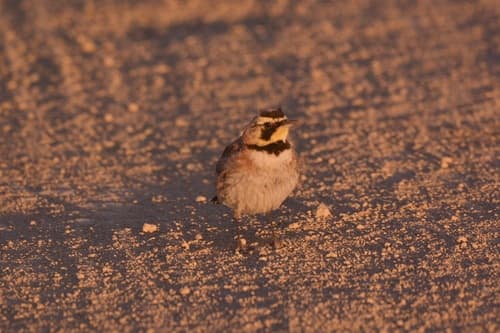
Plumage DetailsAdult Horned Larks have a sandy brown back streaked with darker brown, a pale whitish belly, and a distinctive head pattern. This pattern includes a yellow face and throat, a black mask extending from the bill to behind the eye, a black breast band, and prominent black feather tufts (the 'horns') on the sides of the crown.
Vocalization / CallTheir vocalizations include high-pitched, tinkling calls, often described as a 'tseep' or 'tsee-tsee'. The song is a series of high-pitched, somewhat jumbled notes and trills, often delivered in flight.
Primary Dietomnivore
Primary Habitatsgrassland, tundra, agricultural land, desert, prairie
Conservation Statusleast-concern
Geographic RangeThe Horned Lark has a widespread range across much of North America, parts of Europe, and Asia. In North America, it breeds from Alaska and northern Canada south through the United States and into central Mexico. Northern populations are migratory, moving south for winter, while southern populations are often resident.
Identifying Featuresblack 'horns' (feather tufts), black mask, yellow face and throat, black breast band, ground-dwelling behavior, sandy brown plumage
Description
The Horned Lark is a small, ground-dwelling songbird characterized by its distinctive black 'horns' or feather tufts on its head. It prefers open, barren landscapes, where its sandy brown plumage provides excellent camouflage. This species is often seen foraging on the ground for seeds and insects.