Wandering Albatross
Image: <a href="//commons.wikimedia.org/wiki/User:JJ_Harrison" title="User:JJ Harrison">JJ Harrison</a> (<a rel="nofollow" class="external free" href="https://www.jjharrison.com.au/">https://www.jjharrison.com.au/</a>) (CC BY-SA 3.0)
NameWandering Albatross
Common NameWandering Albatross
Scientific NameDiomedea exulans
FamilyDiomedeidae
Wingspan (cm)310
Length (cm)120
Weight (g)8500
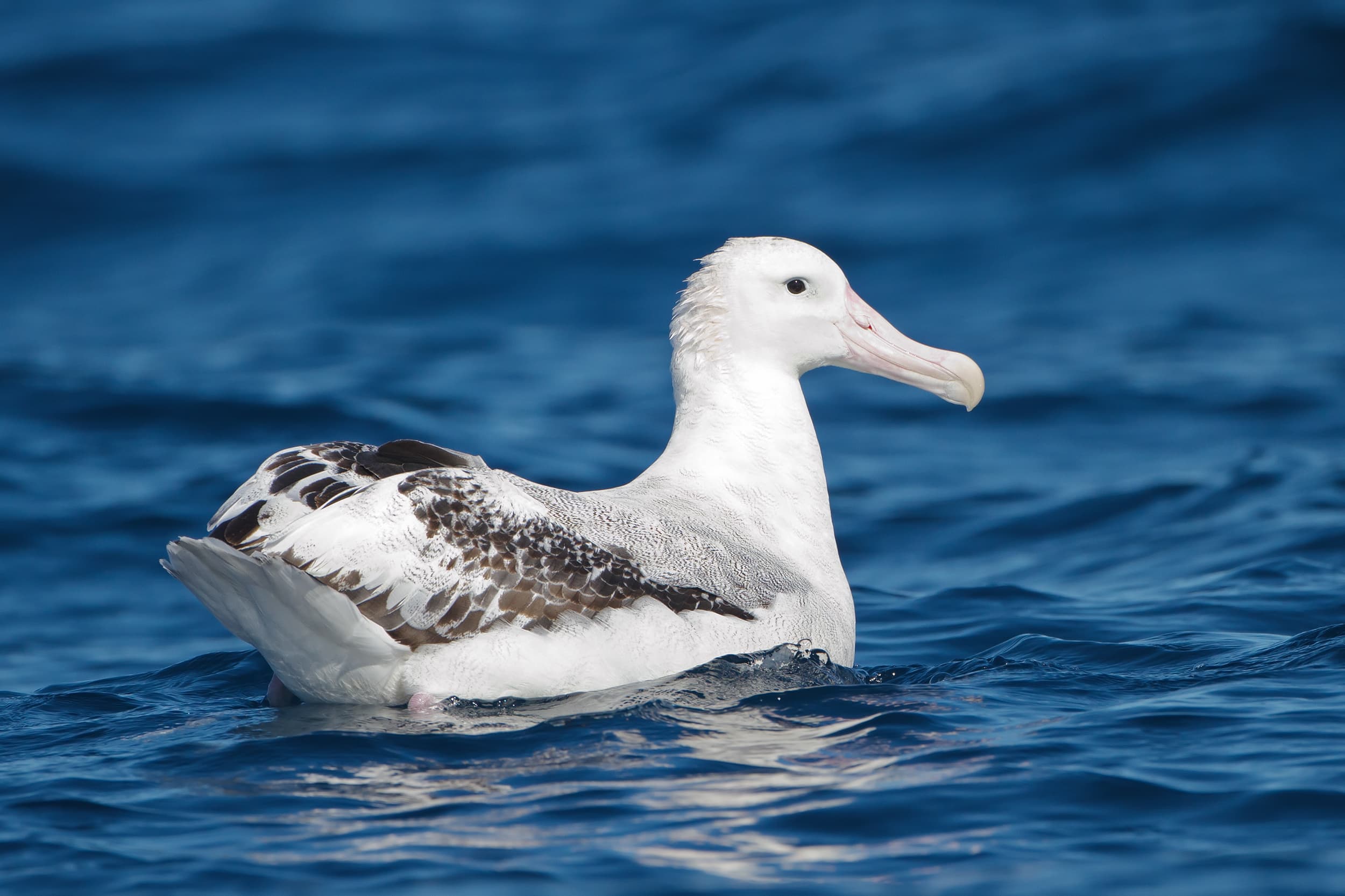
Plumage DetailsAdults have a mostly white body, head, and neck. The upperwings are dark brown to black, with varying amounts of white depending on age and sex, becoming whiter with increasing age. The back and tail are white, sometimes with fine black vermiculations on the back in younger individuals. The bill is large and pale pinkish-white, and the legs are pale pink.
Vocalization / CallGenerally silent at sea, but produces grunts, gurgles, hisses, and bill-clapping during courtship displays, territorial disputes, or when feeding at breeding colonies.
Primary Dietpiscivore
Primary Habitatspelagic, open ocean, remote islands (for breeding)
Conservation Statusvulnerable
Geographic RangeCircumpolar in the Southern Ocean, breeding on subantarctic islands including South Georgia, Crozet Islands, Kerguelen Islands, Prince Edward Islands, and Macquarie Island.
Identifying FeaturesExtremely large size and wingspan, Predominantly white plumage in adults with dark upperwings, Large, pale pinkish bill with a prominent nasal tube, Long, narrow wings adapted for dynamic soaring
Description
The Wandering Albatross is a magnificent seabird renowned for having the largest wingspan of any living bird. Adults are predominantly white with dark upperwings, spending most of their lives soaring effortlessly over the open ocean, only returning to remote islands to breed.