Superb Lyrebird
NameSuperb Lyrebird
Common NameSuperb Lyrebird
Scientific NameMenura novaehollandiae
FamilyMenuridae
Wingspan (cm)70.5
Length (cm)85
Weight (g)900
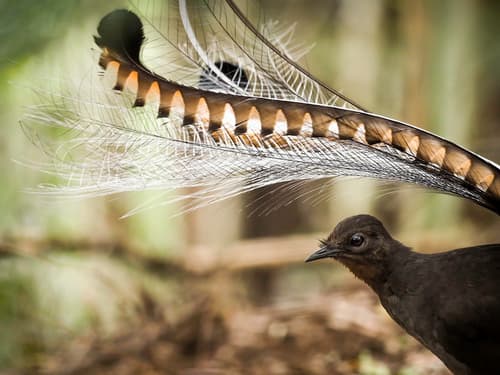
Plumage DetailsMales possess a spectacular tail, up to 70 cm long, composed of two lyre-shaped outer feathers, twelve filamentous 'wire' feathers, and two broad central 'guard' feathers, which are fanned during display. Both sexes have dark brown to grey-brown body plumage, with rufous coloration on the wings and throat. Females and immatures have a long, broad brown tail, lacking the elaborate lyre shape.
Vocalization / CallRenowned for its complex and extensive vocal mimicry, the Superb Lyrebird can imitate a wide array of other bird calls, animal sounds, and even human-made noises like chainsaws or camera shutters. Its own song is also rich and varied, often incorporating these mimicked sounds.
Primary Dietinsectivore
Primary Habitatsrainforest, wet sclerophyll forest, dense bushland
Conservation Statusleast-concern
Geographic RangeEndemic to southeastern Australia, found in parts of New South Wales, Victoria, and southeastern Queensland. It has also been introduced to Tasmania.
Identifying FeaturesSpectacular lyre-shaped tail in males, Exceptional vocal mimicry, Large, ground-dwelling bird, Dark brown body plumage with rufous accents, Strong legs and feet for scratching forest floor
Description
The Superb Lyrebird is a large, ground-dwelling passerine endemic to southeastern Australia, famous for the male's elaborate tail and the species' remarkable ability to mimic a wide range of sounds. They forage on the forest floor, scratching through leaf litter for invertebrates.