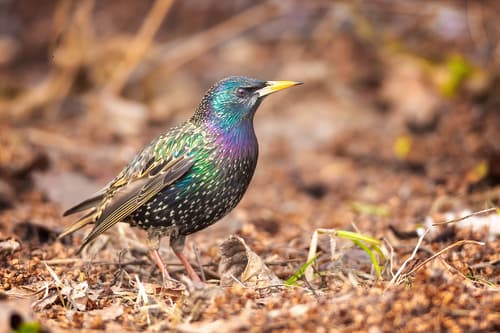
European Starling
NameEuropean Starling
Common NameEuropean Starling
Scientific NameSturnus vulgaris
FamilySturnidae
Wingspan (cm)37.5
Length (cm)21
Weight (g)79
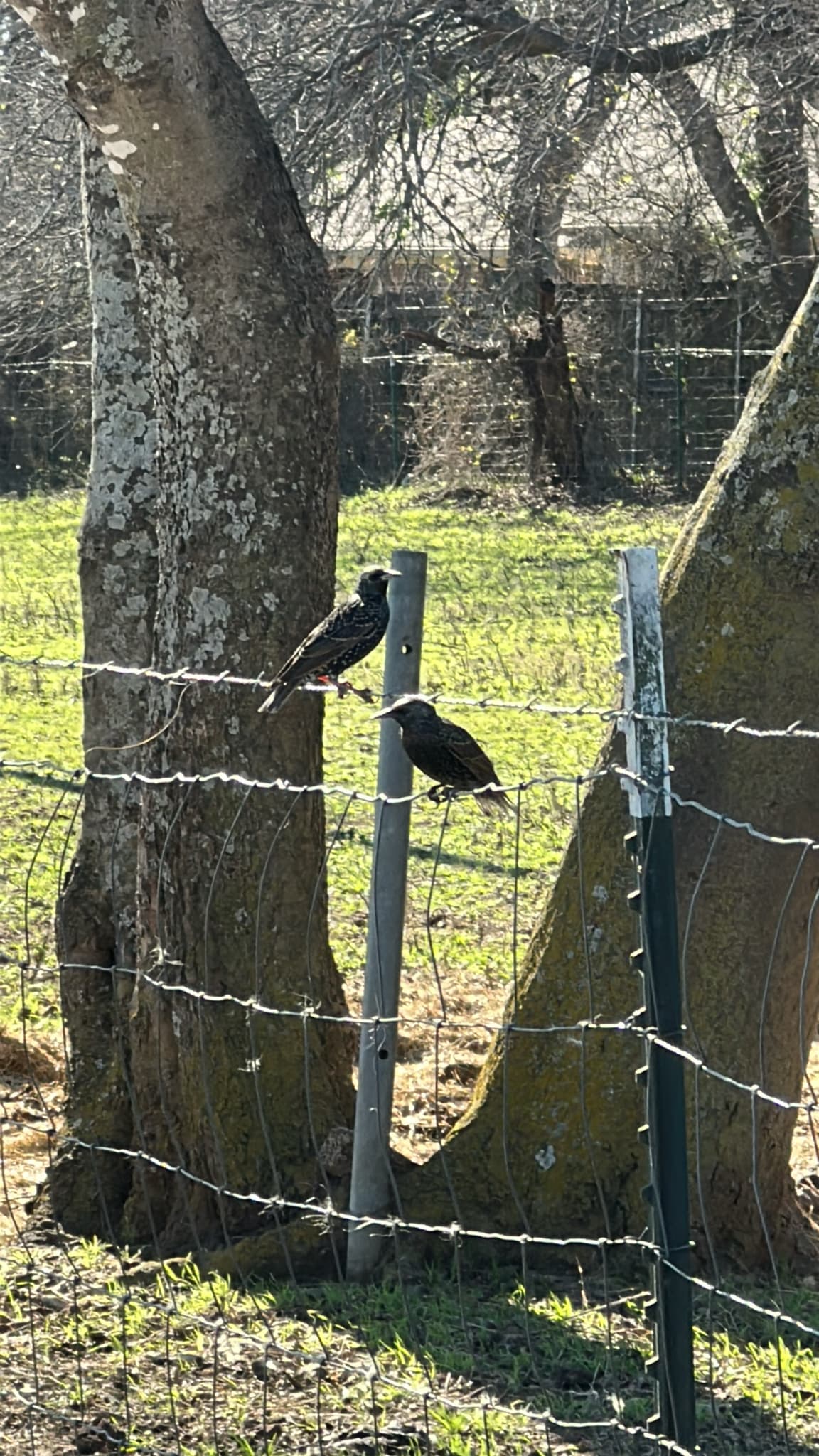
Plumage DetailsAdults exhibit glossy black plumage with strong iridescent green, purple, and blue sheens, particularly on the head and breast. In breeding plumage, the bill is bright yellow and the body is less speckled. In non-breeding (winter) plumage, the body is heavily speckled with white or buff spots, and the bill is darker. Juveniles are dull brown.
Vocalization / CallHighly vocal, producing a complex array of whistles, clicks, chattering, and trills. They are also renowned for their mimicry, often incorporating calls of other birds and environmental sounds into their songs.
Primary Dietomnivore
Primary Habitatsopen woodlands, grasslands, farmlands, urban areas, suburban gardens, coastal cliffs
Conservation Statusleast-concern
Geographic RangeNative to Europe and parts of western Asia. It has been widely introduced and successfully established in North America, Australia, New Zealand, and South Africa, where it is often considered an invasive species.
Identifying Featuresiridescent black plumage, white speckles (especially in winter), bright yellow bill (breeding season), short tail, pointed wings, ground foraging behavior, flocking behavior
Description
The European Starling is a medium-sized passerine bird recognized by its iridescent black plumage, which often displays green, purple, and blue sheens. They are highly social birds, frequently seen foraging in large flocks on the ground, and are known for their varied vocalizations.