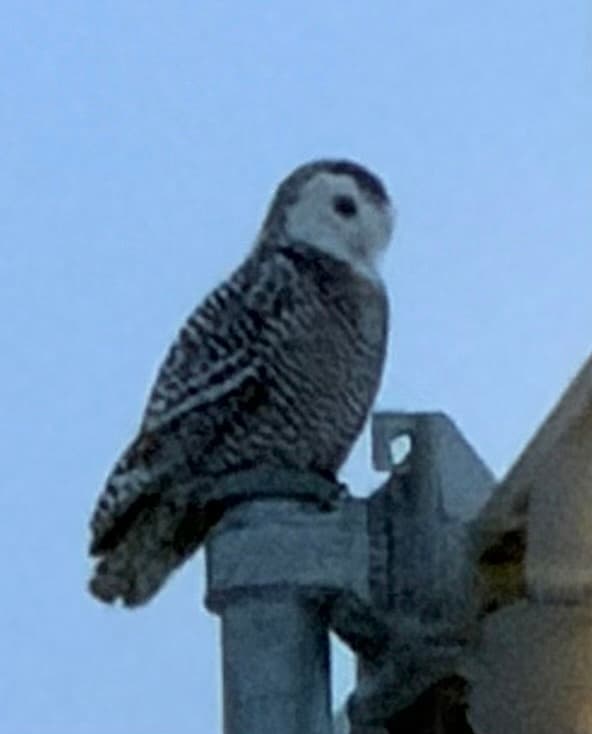
Snowy Owl
Image: Dana Boyle (cc-by-nc)
NameSnowy Owl
Common NameSnowy Owl
Scientific NameBubo scandiacus
FamilyStrigidae
Wingspan (cm)150
Length (cm)59
Weight (g)2275
Plumage DetailsAdult males are often pure white, while females and juveniles exhibit varying amounts of dark brown barring and spotting across their white feathers, particularly on the body and wings. They have bright yellow eyes and a small, black beak.
Vocalization / CallVocalizations include deep, resonant hoots, often in series of two to six. They also produce harsh shrieks, hisses, and clacking sounds, especially when agitated or defending their territory.
Primary Dietcarnivore
Primary Habitatstundra, open grasslands, coastal areas, prairies
Conservation Statusleast-concern
Geographic RangeBreeds in the circumpolar Arctic tundra of North America and Eurasia. During winter, they may migrate south into southern Canada, the northern United States, and parts of Europe and Asia, often appearing in open fields and coastal areas.
Identifying Featureslarge size, predominantly white plumage, dark barring (especially females and juveniles), bright yellow eyes, round head without ear tufts, diurnal hunting behavior
Description
The Snowy Owl is a large, distinctive owl native to the Arctic regions. It is easily recognized by its predominantly white plumage, which provides excellent camouflage in snowy environments, and its striking yellow eyes. Unlike most owls, it is often active during the day.