Great Blue Heron
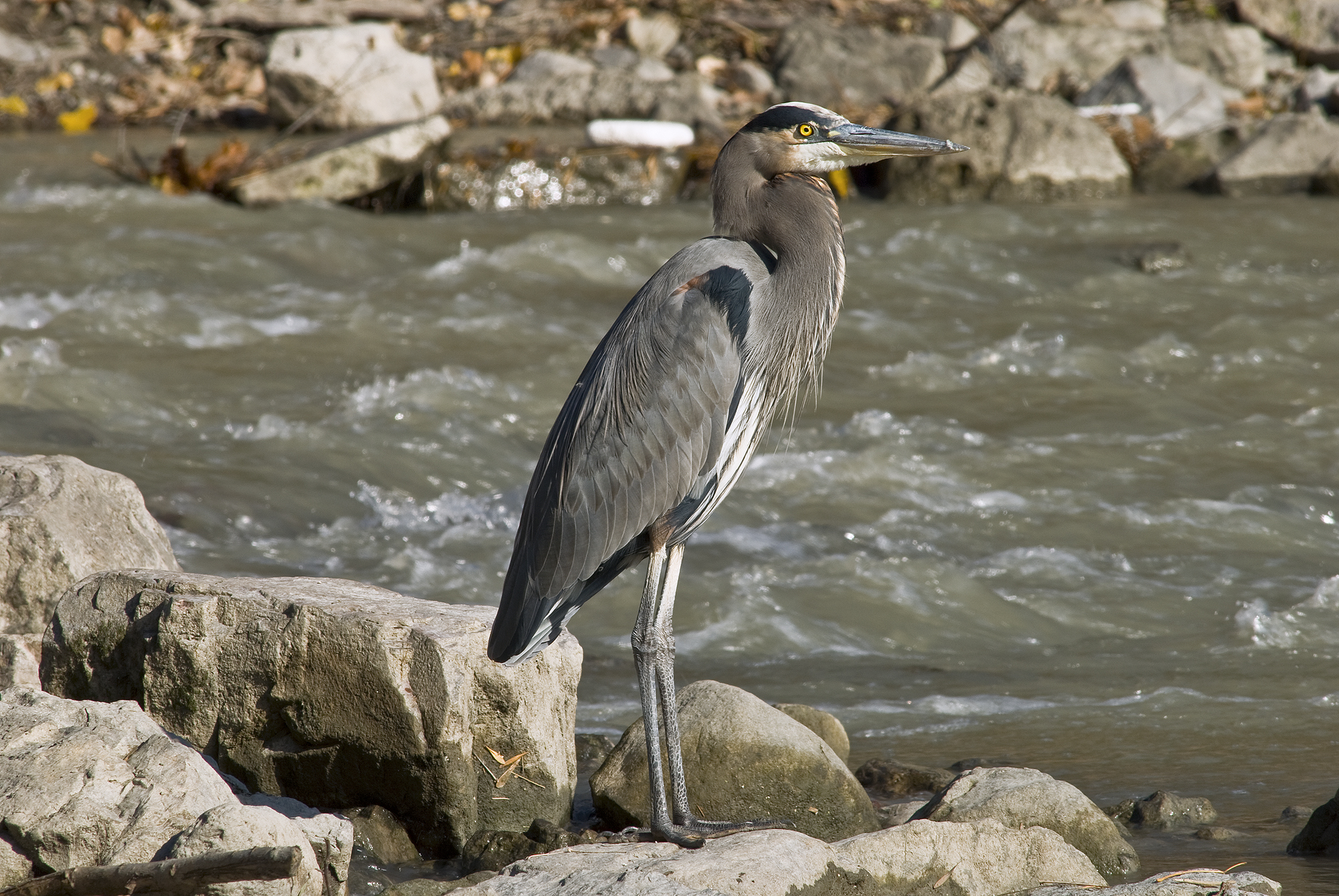
Image: <a href="//commons.wikimedia.org/wiki/User:Acarpentier" title="User:Acarpentier">Acarpentier</a> (CC BY 3.0)
NameGreat Blue Heron
Common NameGreat Blue Heron
Scientific NameArdea herodias
FamilyArdeidae
Wingspan (cm)183
Length (cm)117
Weight (g)2300
Plumage DetailsAdults have a slate-blue to gray body plumage, a white head with a prominent black stripe extending from above the eye to the back of the head, forming a plume. The neck is often rufous-tinged with streaky white and black on the foreneck. The bill is yellowish, and the eyes are yellow.
Vocalization / CallKnown for its deep, guttural 'fraaaank' or 'kraak' call, often given when disturbed, taking flight, or during territorial displays. It also produces various croaks and squawks.
Primary Dietpiscivore
Primary Habitatsfreshwater marshes, saltwater marshes, swamps, lakes, ponds, rivers, coastlines
Conservation Statusleast-concern
Geographic RangeWidespread throughout North and Central America, the Caribbean, and the Galápagos Islands. Northern populations migrate south for the winter, while southern populations are generally resident.
Identifying Featureslarge size, blue-gray plumage, long neck and legs, dagger-like bill, black stripe on white head, slow, deliberate flight with S-curved neck
Description
The Great Blue Heron is a large wading bird characterized by its long legs, S-curved neck, and dagger-like bill. It typically stands motionless in shallow water, patiently waiting to ambush fish and other aquatic prey.