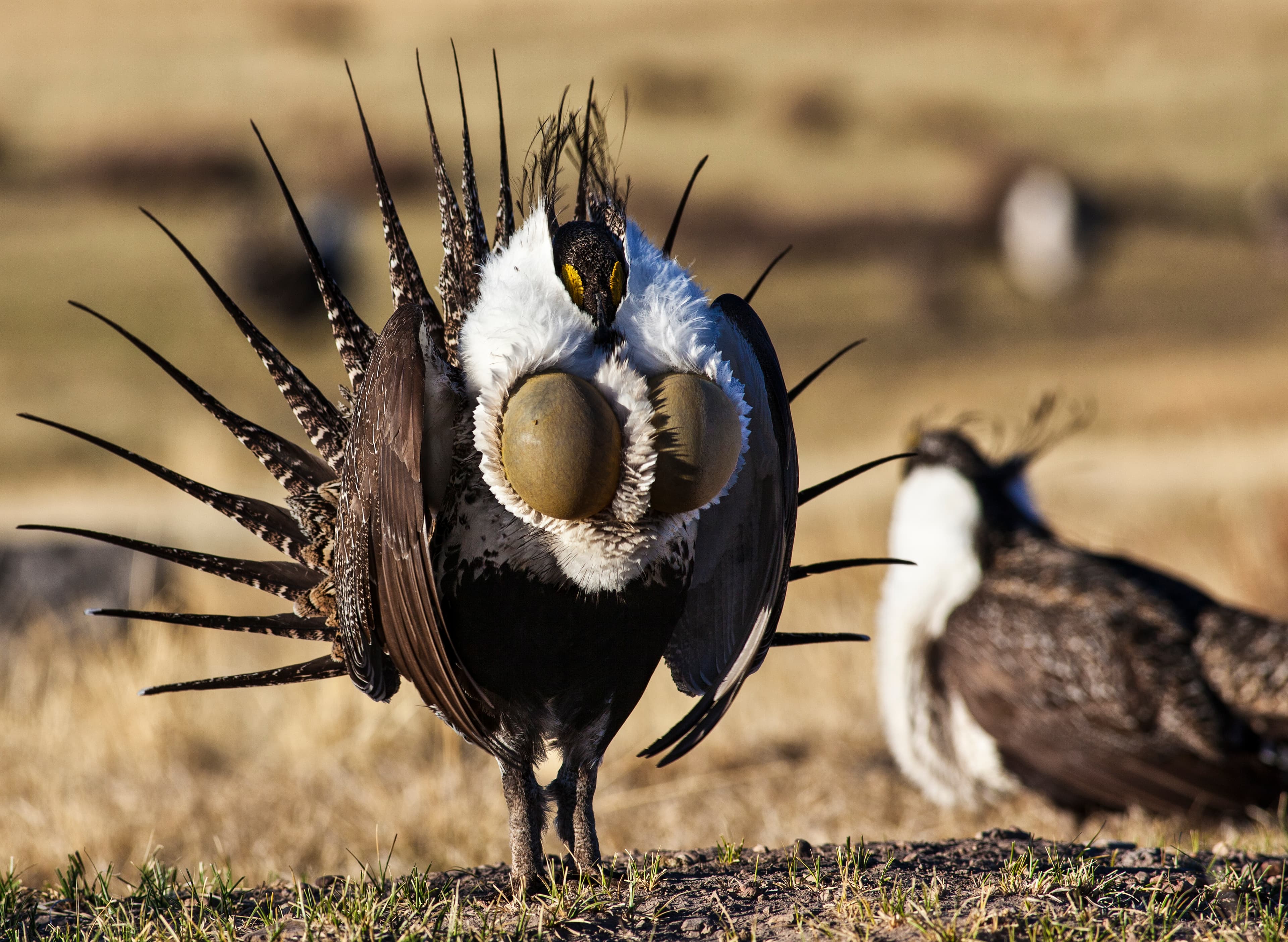
Sage Grouse
Image: <a rel="nofollow" class="external text" href="https://www.flickr.com/people/91981596@N06">Bureau of Land Management</a> (Public domain)
NameSage Grouse
Common NameGreater Sage-Grouse
Scientific NameCentrocercus urophasianus
FamilyPhasianidae
Wingspan (cm)65
Length (cm)65
Weight (g)2000
Plumage DetailsMales have a mottled brown and black body, a white breast with a black throat, and a distinctive white ruff around the neck. They possess two large, inflatable yellow-green gular sacs on the chest and long, spiky tail feathers. A yellow patch of skin is visible above the eye.
Vocalization / CallDuring courtship, males produce a series of deep, resonant popping and bubbling sounds, accompanied by swishing noises from their wings as they inflate and deflate their gular sacs.
Primary Dietomnivore
Primary Habitatssagebrush steppe, grassland
Conservation Statusnear-threatened
Geographic RangeFound in the sagebrush ecosystems of western North America, primarily across the western United States and southern Canada.
Identifying FeaturesLarge size, Long, spiky tail feathers, Elaborate male courtship display with inflated yellow-green gular sacs, White ruff on male's chest, Reliance on sagebrush habitat
Description
The Greater Sage-Grouse is a large ground-dwelling bird known for its elaborate courtship display. Males inflate large yellow-green gular sacs on their chest, fan their spiky tails, and produce unique popping sounds to attract mates on communal display grounds called leks.