Razorbill
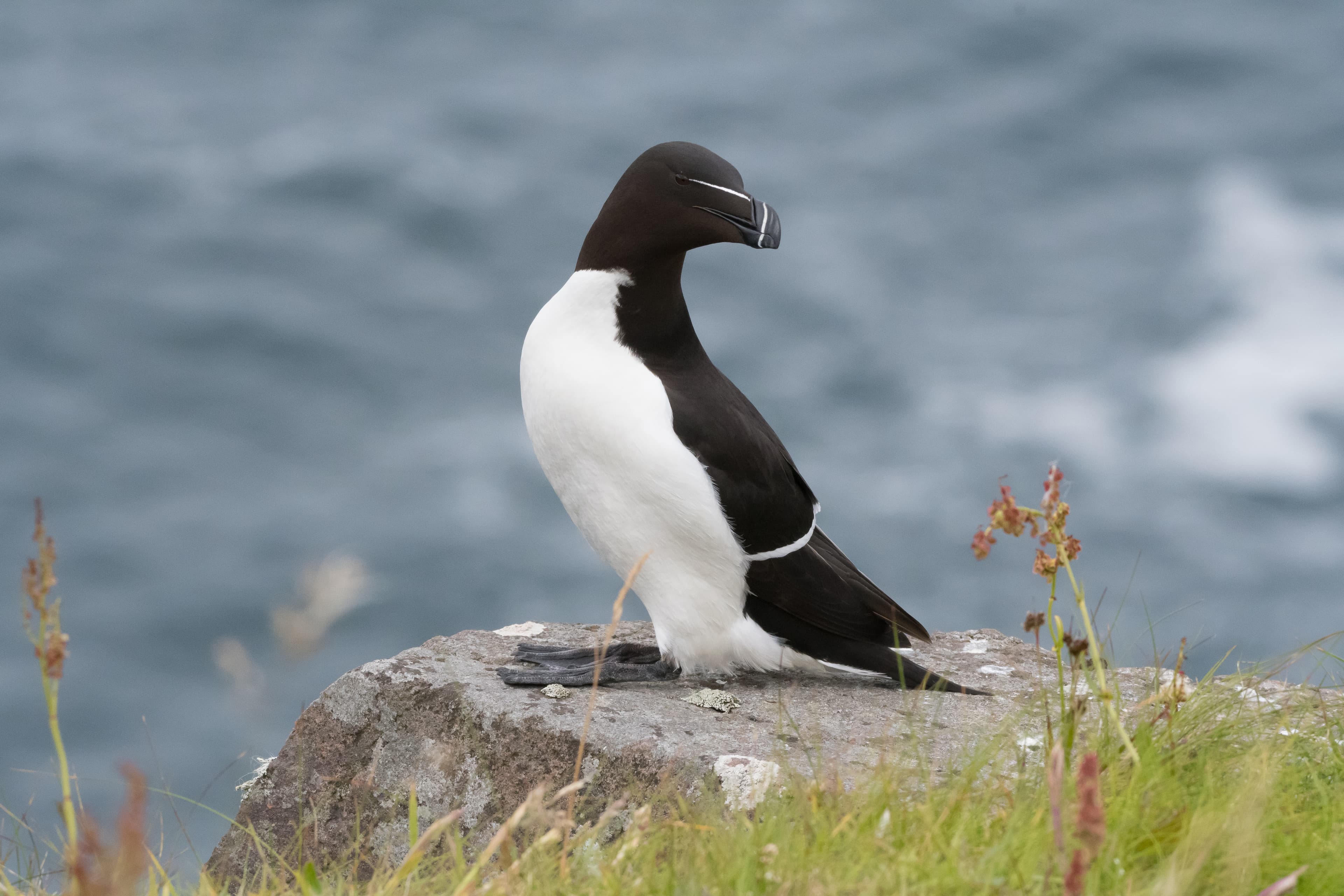
Image: <a href="//commons.wikimedia.org/wiki/User:Chme82" title="User:Chme82">Chme82</a> (CC BY-SA 4.0)
NameRazorbill
Common NameRazorbill
Scientific NameAlca torda
FamilyAlcidae
Wingspan (cm)64.5
Length (cm)40.5
Weight (g)697.5
Plumage DetailsAdult Razorbills have glossy black upperparts, head, and neck, contrasting sharply with pure white underparts. During the breeding season, they display a prominent thin white line running vertically across the bill and another white line extending from the eye to the bill. A white trailing edge is visible on the secondary flight feathers.
Vocalization / CallGenerally silent at sea, Razorbills become vocal at their breeding colonies, producing a variety of guttural growls, grunts, and croaking sounds, often described as 'arrr' or 'karrr'.
Primary Dietpiscivore
Primary Habitatscoastal cliffs, rocky islands, open ocean
Conservation Statusleast-concern
Geographic RangeThe Razorbill breeds on rocky coasts and islands across the North Atlantic Ocean, including eastern North America, Greenland, Iceland, and Europe (from the UK and Scandinavia to Russia). They winter further south within their breeding range.
Identifying FeaturesThick, laterally compressed black bill with a prominent white vertical line, Black upperparts and head contrasting with white underparts, White line from eye to bill (breeding plumage), Upright posture when perched, White trailing edge on wings
Description
The Razorbill is a medium-sized seabird with a distinctive, laterally compressed bill. It is an agile swimmer and diver, using its wings to propel itself underwater in pursuit of fish. These birds typically breed in dense colonies on rocky cliffs and islands.