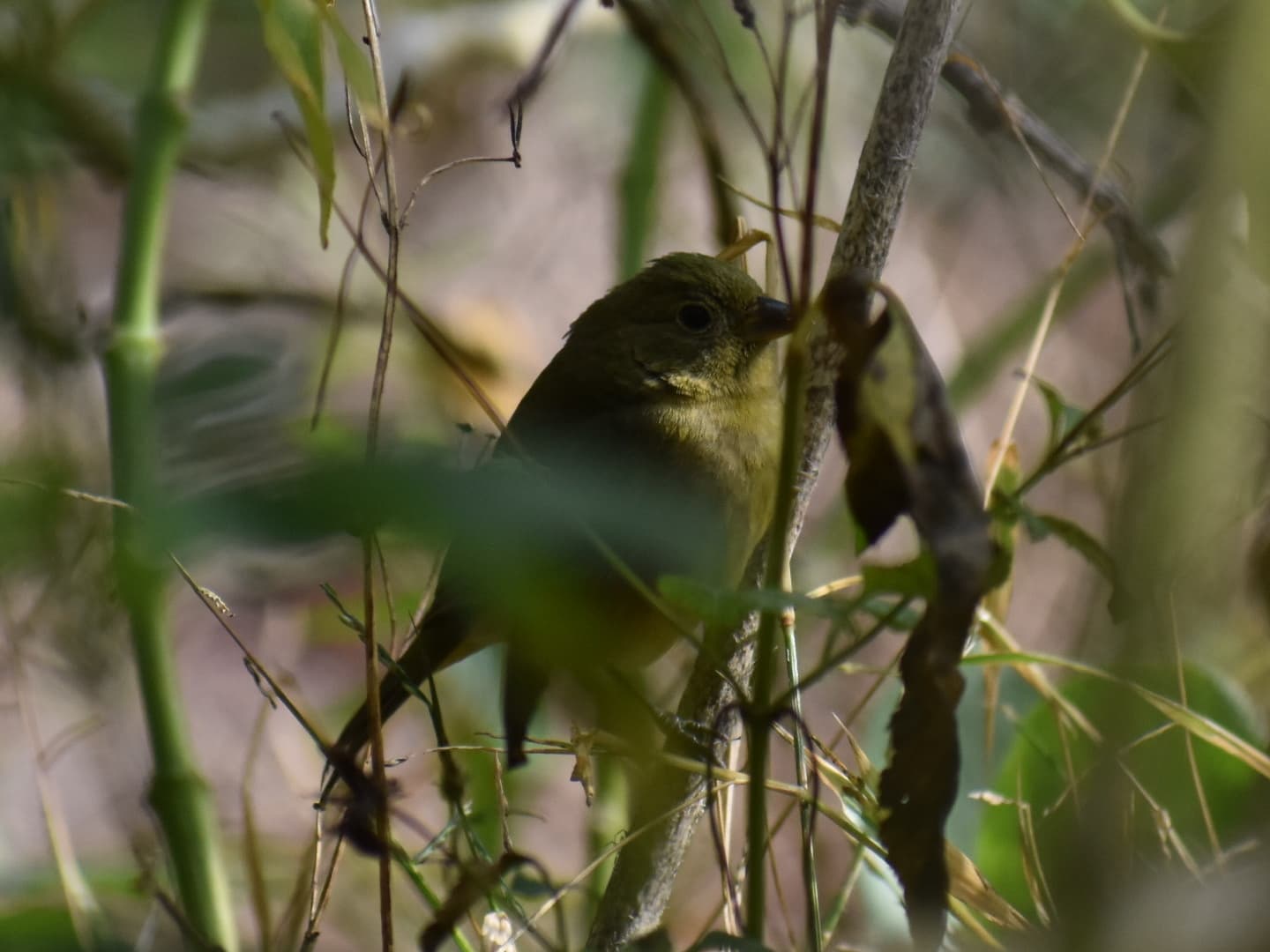
Painted Bunting
Image: Kasey Myers (cc-by-nc)
NamePainted Bunting
Common NamePainted Bunting
Scientific NamePasserina ciris
FamilyCardinalidae
Wingspan (cm)21
Length (cm)13.5
Weight (g)13.5
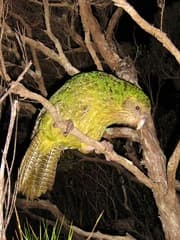
Plumage DetailsAdult males are unmistakable with a deep blue head, bright red underparts, and a green back. Females and immatures are uniformly bright greenish-yellow, with slightly paler underparts and a faint eye-ring, as seen in the image.
Vocalization / CallTheir song is a sweet, high-pitched warble, often described as a series of varied phrases. Calls include a sharp 'chip' or 'tewk' note.
Primary Dietomnivore
Primary Habitatsshrubland, forest edge, grassland, gardens
Conservation Statusleast-concern
Geographic RangeBreeds in two distinct populations: one in the southeastern United States (coastal plains from North Carolina to Florida and west to Louisiana) and another in the south-central U.S. (Oklahoma, Texas, Arkansas, Missouri). Winters in southern Florida, Mexico, Central America, and the Caribbean.
Identifying FeaturesVivid multi-colored plumage (males), Bright greenish-yellow plumage (females/immatures), Small, finch-like bill, Shy, often hidden in dense vegetation
Description
The Painted Bunting is a small, colorful songbird known for its striking sexual dimorphism. Males boast brilliant blue, red, and green plumage, while females and immatures, like the one pictured, are a more subdued but still attractive greenish-yellow. They are often shy and difficult to spot, preferring dense vegetation.