Painted Bunting
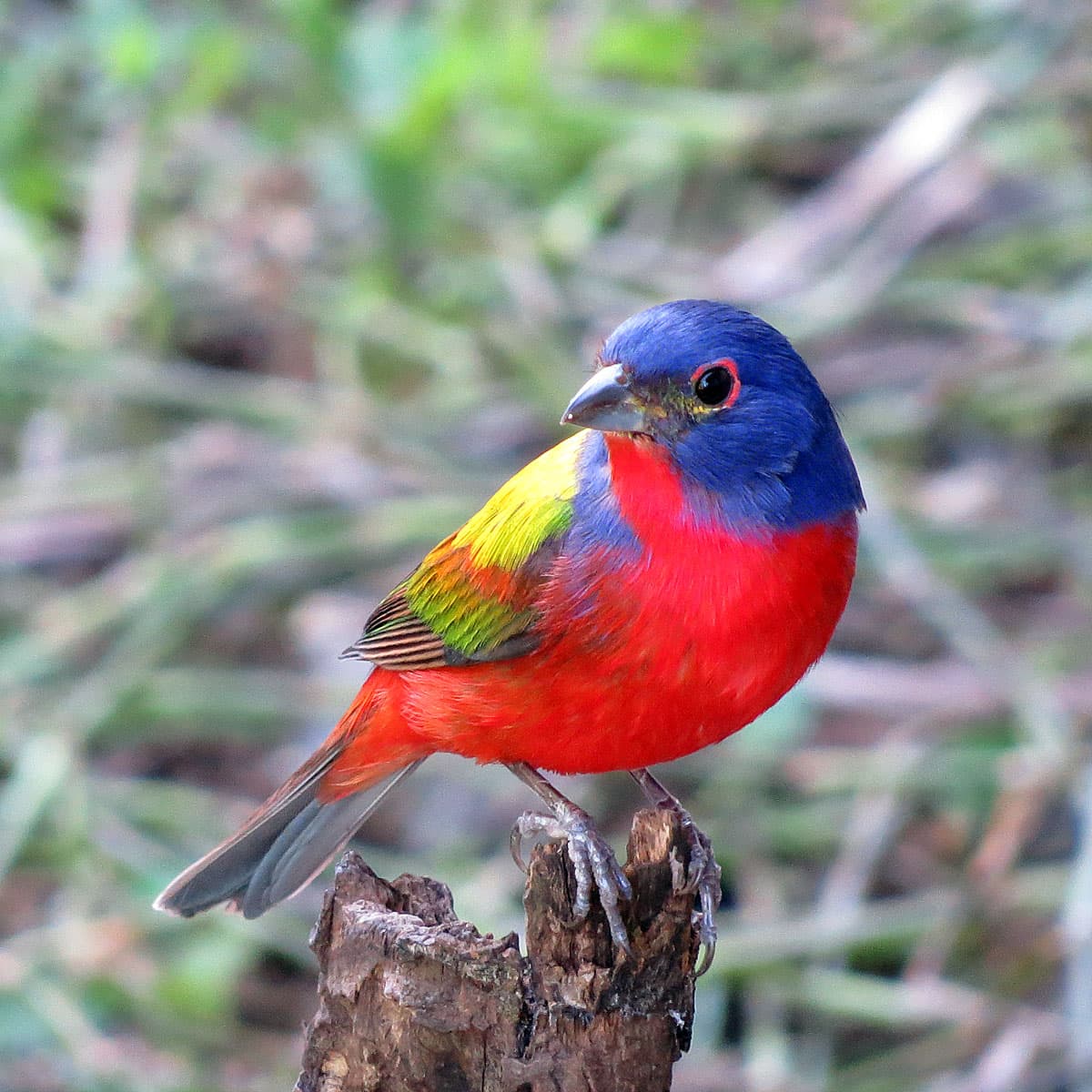
Image: <a rel="nofollow" class="external text" href="https://www.flickr.com/people/50763319@N04">Don Faulkner</a> (CC BY-SA 2.0)
NamePainted Bunting
Common NamePainted Bunting
Scientific NamePasserina ciris
FamilyCardinalidae
Wingspan (cm)21.5
Length (cm)13
Weight (g)16
Plumage DetailsAdult males are unmistakable with a brilliant iridescent blue head, bright red underparts, and a green back with yellow patches on the wings. Females and immatures are duller, primarily green-yellow overall with a pale eye-ring, providing excellent camouflage.
Vocalization / CallThe song is a high-pitched, sweet, warbling series of clear, whistled notes, often described as 'sweet-sweet-sweet-chew-chew-chew'. Calls include a sharp 'chip' or 'tew' note.
Primary Dietomnivore
Primary Habitatsshrubland, woodland edge, coastal hammocks, thickets, suburban gardens
Conservation Statusleast-concern
Geographic RangeBreeds in two distinct populations: one in the southeastern United States (Florida, Georgia, Carolinas) and another in the south-central United States (Texas, Oklahoma, Louisiana, Arkansas). Winters in southern Florida, southern Mexico, Central America, and the Caribbean.
Identifying FeaturesMale's iridescent blue head, red underparts, and green back, Small size with a conical bill, Female's plain green-yellow plumage, Shy and secretive behavior, often staying hidden in dense foliage
Description
The Painted Bunting is a small, vibrant songbird renowned for the male's strikingly colorful plumage. Males are often shy and secretive, preferring dense vegetation, while females are a more subdued green-yellow. They forage on the ground or in low shrubs for seeds and insects.