Oilbird
NameOilbird
Common NameOilbird
Scientific NameSteatornis caripensis
FamilySteatornithidae
Wingspan (cm)98
Length (cm)45
Weight (g)415
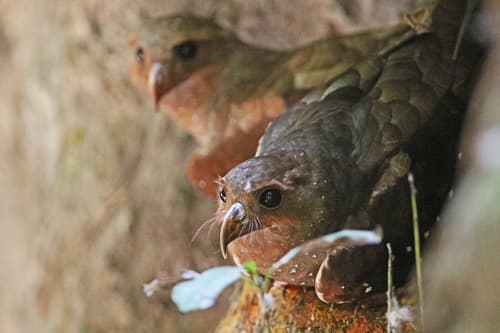
Plumage DetailsPlumage is predominantly reddish-brown to dark brown, heavily mottled and barred with black, and conspicuously spotted with white, particularly on the head, neck, and wings. The underparts are paler with white spots.
Vocalization / CallOilbirds produce a variety of loud, harsh screeches, squawks, and guttural calls. They also emit distinctive, audible clicking sounds for echolocation, especially when navigating in dark caves.
Primary Dietfrugivore
Primary Habitatscaves, tropical forest
Conservation Statusleast-concern
Geographic RangeFound in northern South America, including Colombia, Venezuela, Ecuador, Peru, Bolivia, Brazil, Trinidad, Guyana, Suriname, French Guiana, Panama, and Costa Rica.
Identifying FeaturesNocturnal and cave-dwelling, Large, forward-facing eyes, Strong, hooked bill with prominent rictal bristles, Mottled brown plumage with white spots, Unique echolocation ability (audible clicks), Long, pointed wings
Description
The Oilbird is a unique nocturnal, cave-dwelling bird known for its ability to echolocate in darkness. It is the only nocturnal frugivore in the world, feeding exclusively on the fruits of oil palms and tropical laurels.