Oilbird
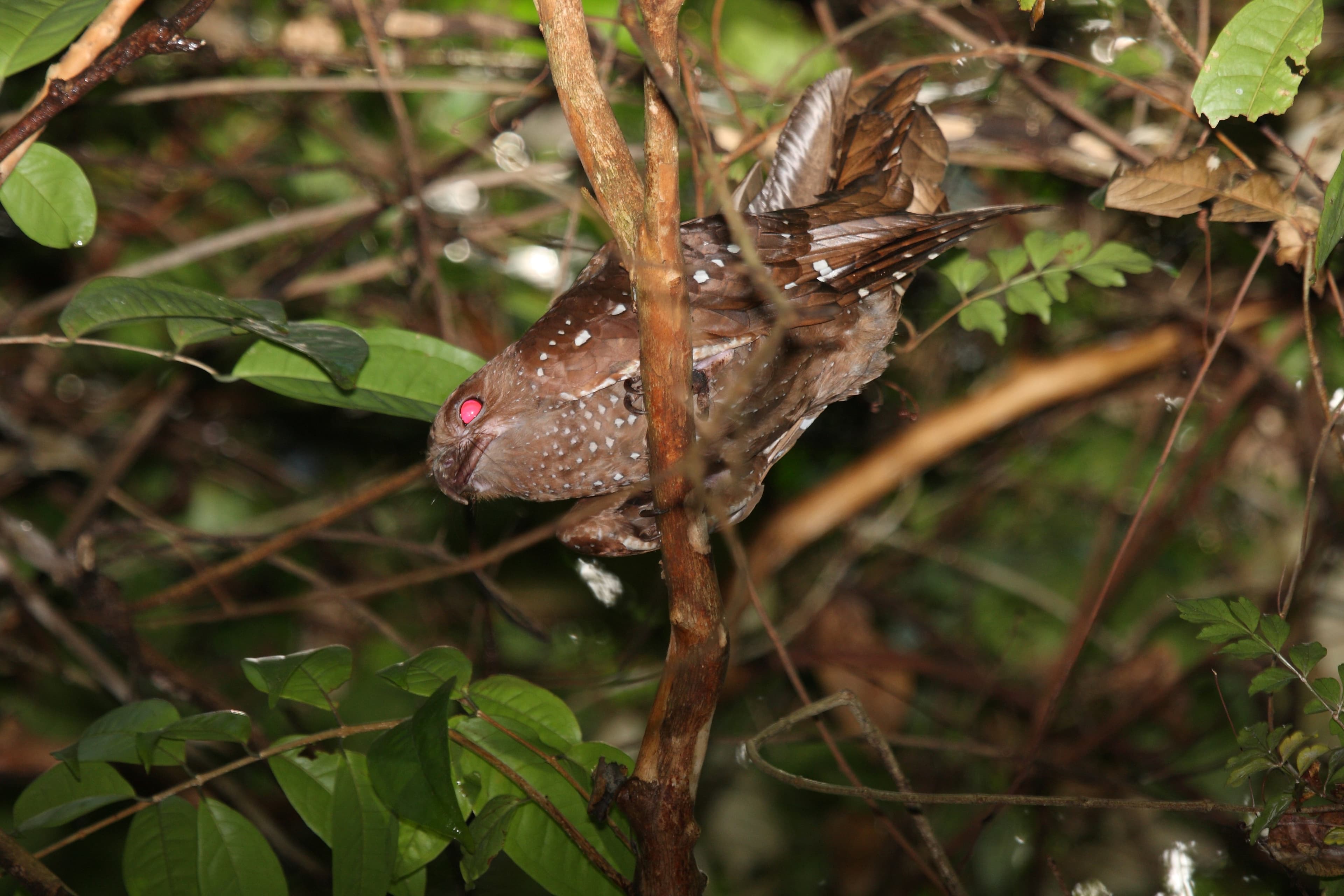
Image: <a rel="nofollow" class="external text" href="https://www.flickr.com/photos/9765210@N03">Dominic Sherony</a> (CC BY-SA 2.0)
NameOilbird
Common NameOilbird
Scientific NameSteatornis caripensis
FamilySteatornithidae
Wingspan (cm)95
Length (cm)45
Weight (g)415
Plumage DetailsThe plumage is predominantly rufous-brown, heavily mottled and barred with black, and conspicuously spotted with white on the head, nape, and wing coverts. The underparts are paler, and the large, forward-facing eyes are a striking reddish-pink.
Vocalization / CallOilbirds produce a variety of harsh, guttural screeches and squawks, particularly when disturbed in their caves. They also emit audible clicking sounds for echolocation, which they use to navigate in complete darkness.
Primary Dietfrugivore
Primary Habitatscaves, tropical forest, subtropical forest
Conservation Statusleast-concern
Geographic RangeFound in northern South America, including Colombia, Venezuela, Ecuador, Peru, Bolivia, Brazil, Guyana, Suriname, French Guiana, and on the island of Trinidad. They inhabit mountainous regions and lowlands where suitable caves and fruit trees are present.
Identifying Featuresnocturnal, cave-dwelling, echolocation, large red eyes, spotted brown plumage, specialized frugivore
Description
The Oilbird is a unique nocturnal bird known for its cave-dwelling habits and echolocation abilities. It has a robust body, large red eyes, and a specialized diet of fruit, primarily from oil palms and laurels. This species is the only nocturnal frugivore in the world.