Avipedia
Lammergeier (Bearded Vulture)

Lammergeier (Bearded Vulture)

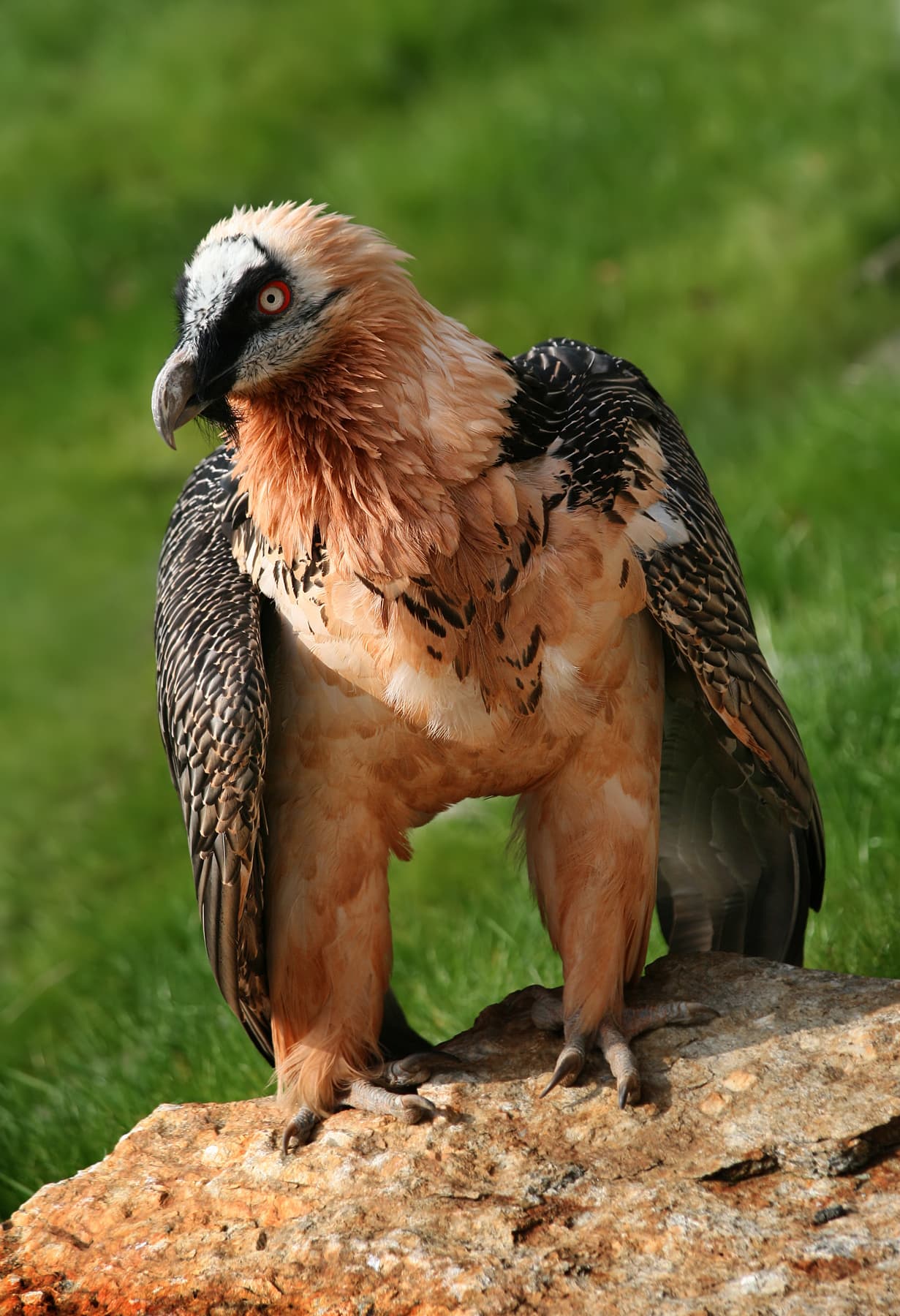
Image: <a href="//commons.wikimedia.org/wiki/User:Richard_Bartz" title="User:Richard Bartz">Richard Bartz</a>, Munich aka <a href="//commons.wikimedia.org/wiki/User:Makro_Freak" title="User:Makro Freak">Makro Freak</a> <span class="mw-default-size" typeof="mw:File"><a href="//commons.wikimedia.org/wiki/File:Makro_Freak_bar.jpg" class="mw-file-description"><img src="https://upload.wikimedia.org/wikipedia/commons/8/8b/Makro_Freak_bar.jpg" decoding="async" width="80" height="15" class="mw-file-element" data-file-width="80" data-file-height="15"></a></span> (CC BY-SA 2.5)

NameLammergeier (Bearded Vulture)
Common NameLammergeier
Scientific NameGypaetus barbatus
FamilyAccipitridae
Wingspan (cm)280
Length (cm)105
Weight (g)6000
Plumage DetailsAdults display a striking rusty-orange plumage on their underparts, head, and neck, often stained by iron oxides from dust-bathing. Their back and wings are dark grey to black, contrasting with a white crown and a distinctive black facial mask that extends into bristly 'beards' under the beak.
Vocalization / CallGenerally silent in flight, Lammergeiers can produce high-pitched whistles, hisses, and cackles, particularly during breeding displays or when interacting at a carcass.
Primary Dietcarnivore
Primary Habitatsmountainous regions, cliffs, alpine pastures, high plateaus
Conservation Statusnear-threatened
Geographic RangeThe Lammergeier has a vast but fragmented range, found in mountainous areas across southern Europe (Pyrenees, Alps, Balkans), parts of Africa (Ethiopia, East Africa), the Middle East, and Central Asia extending to the Himalayas.
Identifying Featureslarge size, distinctive black 'beard' of bristles under the beak, rusty-orange underparts (in adults), dark grey/black wings and back, white head with black facial mask, wedge-shaped tail (in flight), specialized diet of bones

Description

The Lammergeier is a majestic Old World vulture known for its unique feeding habits, primarily consuming bone marrow. It often drops large bones from great heights onto rocks to shatter them, accessing the nutritious marrow inside. This large raptor inhabits remote mountainous regions, soaring gracefully on thermal currents.

Related Bird species