Ivory Gull
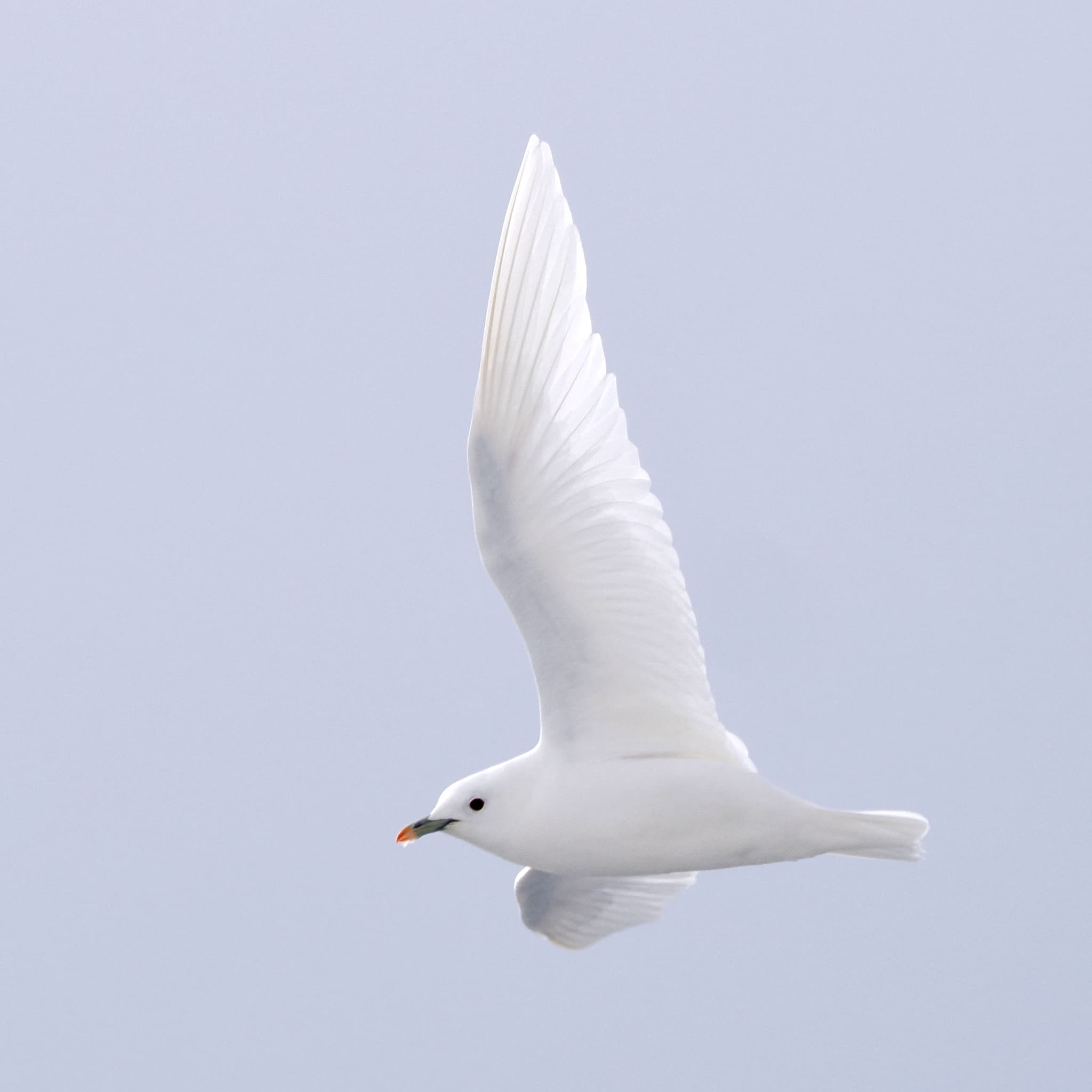
Image: steve b (cc0)
NameIvory Gull
Common NameIvory Gull
Scientific NamePagophila eburnea
FamilyLaridae
Wingspan (cm)114
Length (cm)42.5
Weight (g)575
Plumage DetailsAdults are entirely pure white, including all flight feathers, giving them a pristine appearance. They have small, dark eyes and a relatively small bill that is yellowish-green at the base and dark at the tip. Juveniles have dark spots on the face and back, and a dark terminal band on the tail.
Vocalization / CallVocalizations include harsh, high-pitched "kree-kree" calls, often described as a shrill, tern-like "kew-kew-kew" or a more guttural "karrr".
Primary Dietomnivore
Primary Habitatsarctic marine, ice floes, tundra, coastal cliffs
Conservation Statusnear-threatened
Geographic RangeHigh Arctic regions, breeding on remote islands and coasts of Canada, Greenland, Svalbard, and Russia. Winters further south in the Arctic, often associated with pack ice and open water leads.
Identifying Featurespure white plumage (adults), small dark eyes, bicolored bill (yellowish-green base, dark tip), tern-like flight, found in high Arctic
Description
The Ivory Gull is a striking medium-sized gull, entirely pure white in adult plumage, making it unmistakable in its Arctic habitat. It is an opportunistic scavenger and predator, often found near ice edges and polar bear kills, demonstrating a strong association with sea ice.