Arctic Tern
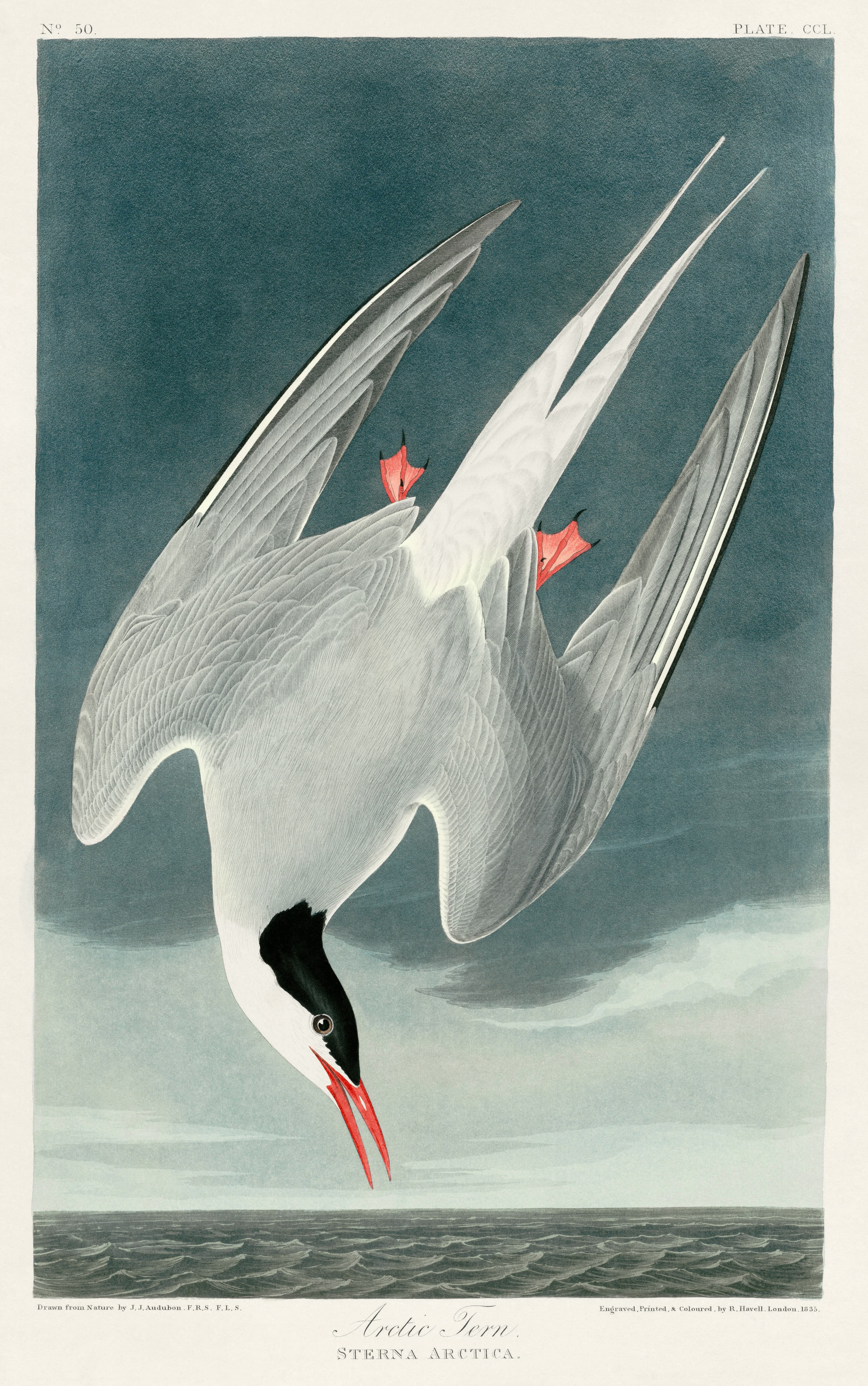
Image: <bdi><a href="https://en.wikipedia.org/wiki/en:John_James_Audubon" class="extiw" title="w:en:John James Audubon"><span title="French-American ornithologist, naturalist, and painter (1785–1851)">John James Audubon</span></a></bdi> (Public domain)
NameArctic Tern
Common NameArctic Tern
Scientific NameSterna paradisaea
FamilyLaridae
Wingspan (cm)80
Length (cm)36
Weight (g)100
Plumage DetailsAdult Arctic Terns have a distinctive black cap, grey upperparts (back and wings), and white underparts. Their bill is bright red, often with a dark tip, and their legs are also red. They possess a deeply forked white tail with grey outer webs.
Vocalization / CallVocalizations include a sharp, grating 'kree-ah' call, often given in alarm or during territorial disputes, and a rapid 'kik-kik-kik' series.
Primary Dietpiscivore
Primary Habitatscoastal areas, open ocean, tundra, islands, rocky shores
Conservation Statusleast-concern
Geographic RangeBreeds in Arctic and sub-Arctic regions across North America, Europe, and Asia. Migrates to Antarctic waters for the non-breeding season, covering an annual round trip of approximately 70,000-80,000 km.
Identifying Featureslongest migration of any bird, black cap, red bill, deeply forked tail, grey upperparts, white underparts, buoyant flight
Description
The Arctic Tern is a medium-sized seabird renowned for undertaking the longest migratory journey of any animal, traveling from Arctic breeding grounds to Antarctic non-breeding grounds and back each year. It is characterized by its graceful, buoyant flight and agile diving for fish.