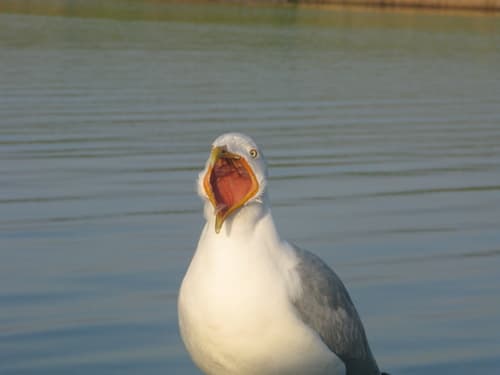
Herring Gull
NameHerring Gull
Common NameHerring Gull
Scientific NameLarus argentatus
FamilyLaridae
Wingspan (cm)148
Length (cm)61
Weight (g)1375
Plumage DetailsAdult Herring Gulls have a white head, neck, underparts, and tail. Their back and upperwings are grey, with black wingtips featuring white spots. They possess a strong yellow bill with a distinctive red spot on the lower mandible, and pale yellow eyes often encircled by a red orbital ring.
Vocalization / CallHerring Gulls are very vocal, producing a variety of loud, raucous calls. Common vocalizations include a long, wailing 'hoo-hoo-hoo' or 'kyow-kyow-kyow' call, as well as alarm calls and short 'ga-ga-ga' sounds.
Primary Dietomnivore
Primary Habitatscoastal, urban, estuaries, harbors, landfills, agricultural fields
Conservation Statusleast-concern
Geographic RangeThe Herring Gull has a wide distribution across the North Atlantic, breeding in coastal and inland areas of Europe, North America, and parts of Asia. The Western European population is particularly widespread along the coasts and inland waters of Western Europe.
Identifying Featureslarge size, grey back, white head and underparts, yellow bill with red spot, pale yellow eyes, black wingtips with white spots
Description
The Herring Gull is a large, common gull species often found in coastal and urban environments. Known for its opportunistic feeding habits, it is frequently seen scavenging for food and is highly vocal, especially when communicating with its flock or defending territory.