Western Meadowlark
Image: Jared (cc-by-nc)
NameWestern Meadowlark
Common NameWestern Meadowlark
Scientific NameSturnella neglecta
FamilyIcteridae
Wingspan (cm)39.5
Length (cm)23.5
Weight (g)105
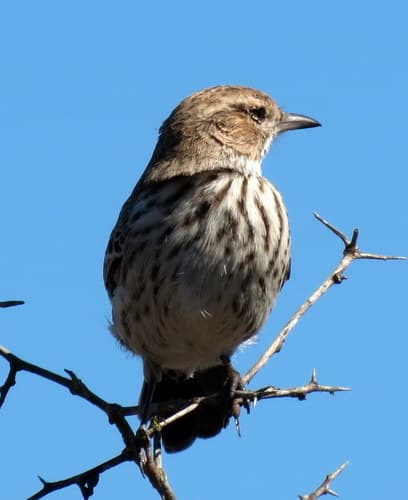
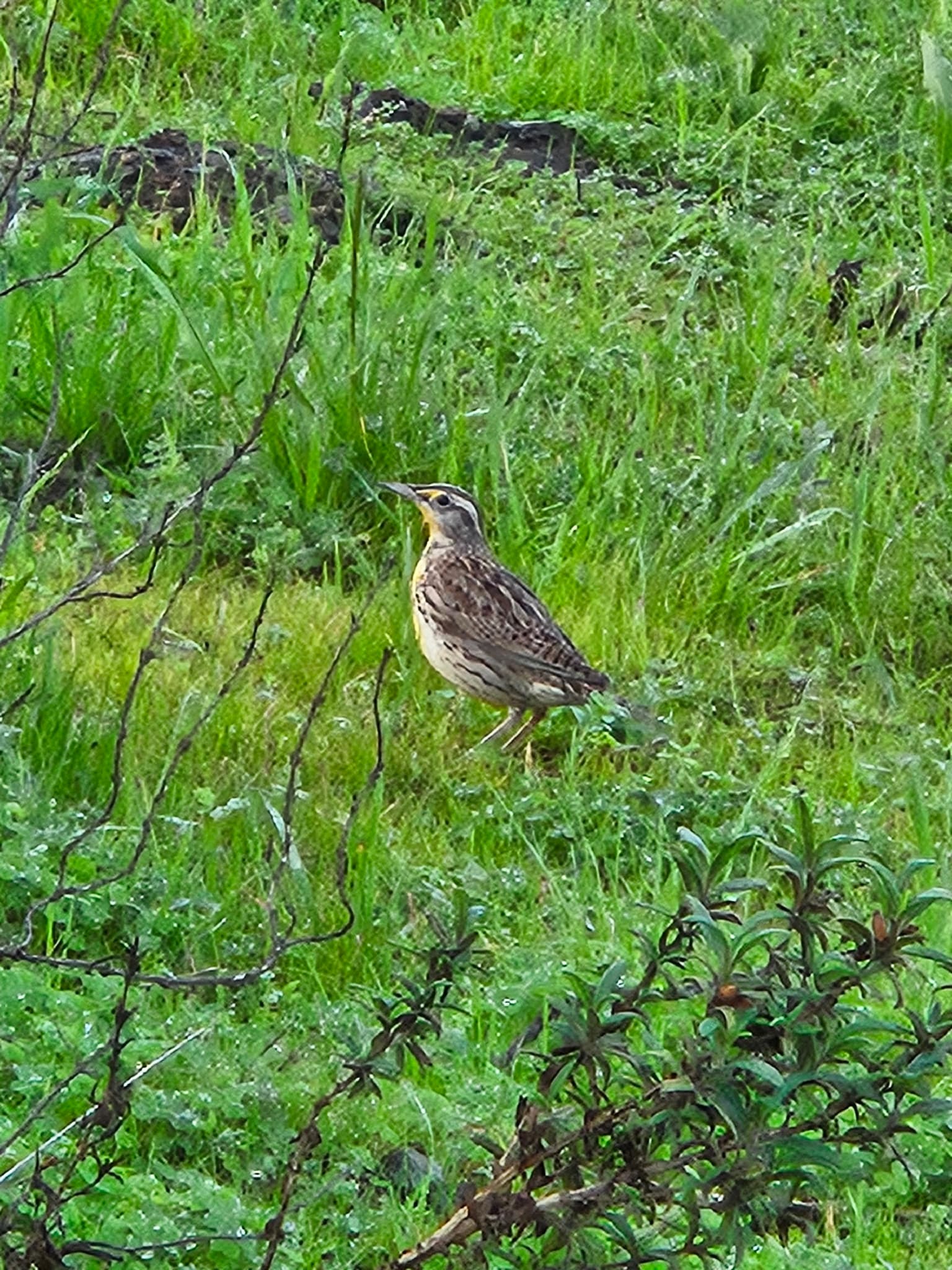
Plumage DetailsAdult Western Meadowlarks have bright yellow underparts with a prominent black V-shaped band on the chest; the flanks are streaked with black. The back, wings, and tail are mottled brown and black with lighter streaks. The head features a yellow supercilium (eyebrow stripe) and a dark eye-line, with a streaked crown.
Vocalization / CallThe Western Meadowlark is famous for its clear, flute-like, gurgling song, often described as a series of descending, whistled notes. Its song is distinct from the Eastern Meadowlark's. It also produces a sharp 'chupp' call.
Primary Dietomnivore
Primary Habitatsgrassland
Conservation Statusleast-concern
Geographic RangeWidespread across western and central North America, breeding from southern Canada through the western and central United States, and into northern Mexico. Northern populations migrate south for winter, while southern populations are often resident year-round.
Identifying Featuresbright yellow breast with black V-band, streaky brown and black back, long, pointed bill, flute-like, gurgling song, white outer tail feathers visible in flight
Description
The Western Meadowlark is a medium-sized songbird recognized by its striking yellow underparts and a distinctive black V-shaped band across its chest. It is commonly found in open grasslands and fields, where it forages on the ground for insects and seeds. This species is celebrated for its beautiful, flute-like song.