Indigo Bunting
Image: <a href="//commons.wikimedia.org/wiki/User:Rhododendrites" title="User:Rhododendrites">Rhododendrites</a> (CC BY-SA 4.0)
NameIndigo Bunting
Common NameIndigo Bunting
Scientific NamePasserina cyanea
FamilyCardinalidae
Wingspan (cm)20.5
Length (cm)13.25
Weight (g)15
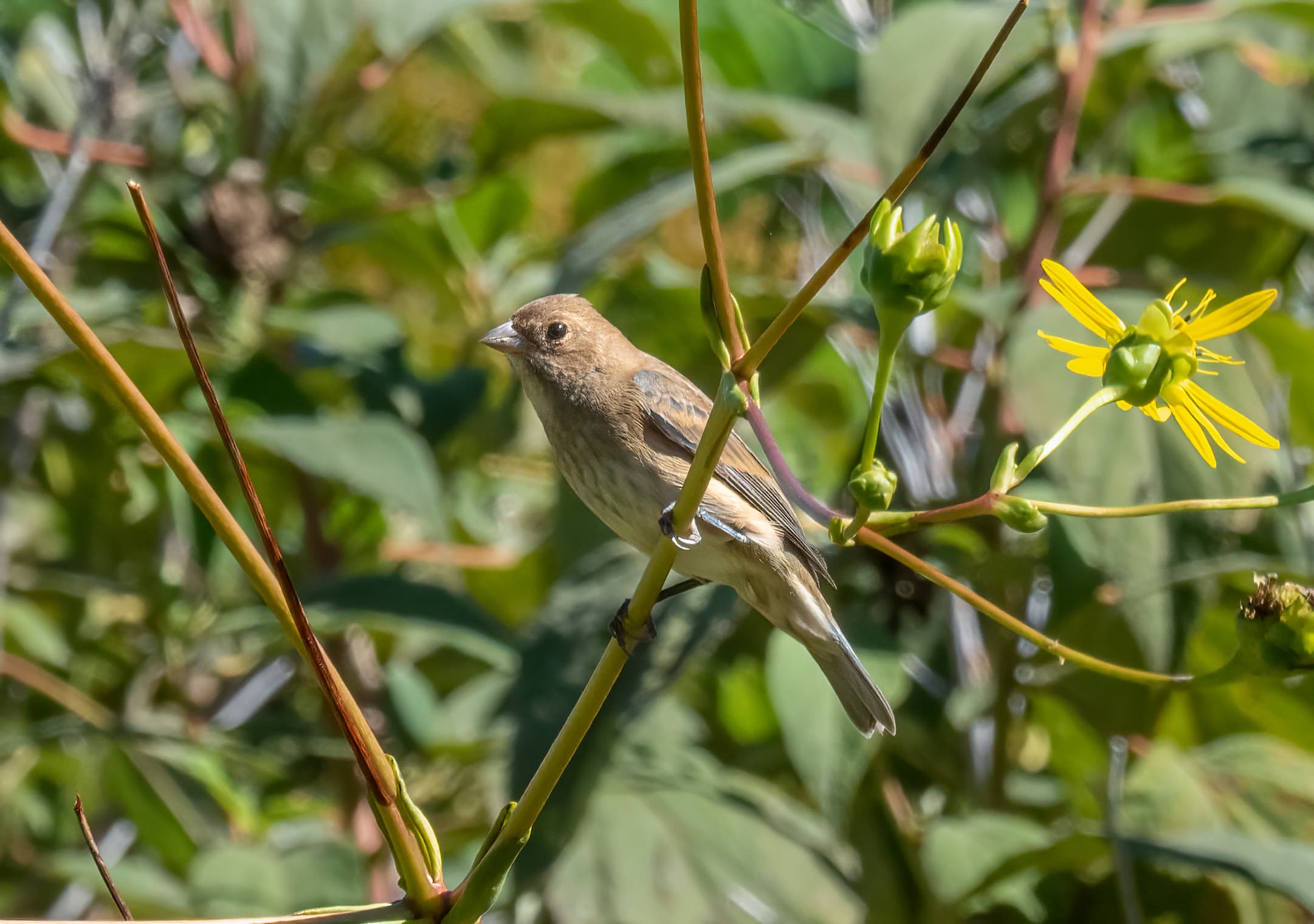
Plumage DetailsAdult males are entirely iridescent indigo blue during the breeding season, appearing blackish in poor light. Females and juveniles are plain brown overall, often with faint streaking on the breast and whitish underparts, sometimes showing a hint of blue on the tail or wings. The bird in the image is a female or juvenile.
Vocalization / CallThe song is a high-pitched, rapid, and often double-noted series of phrases, described as 'sweet-sweet, chew-chew, sweet-sweet, where-where, here-here'. Calls include a sharp 'spik' or 'chip'.
Primary Dietomnivore
Primary Habitatsshrubland, forest edge, grassland, agricultural land
Conservation Statusleast-concern
Geographic RangeBreeds across eastern North America, from southern Canada to the Gulf Coast. Winters in southern Florida, Mexico, Central America, and the Caribbean.
Identifying Featuresbright indigo blue plumage (males), plain brown plumage with faint streaking (females/juveniles), conical bill, short tail, distinctive high-pitched song
Description
The Indigo Bunting is a small, finch-like bird known for the brilliant indigo blue plumage of the breeding male. Females and juveniles are dull brown. They are often found in brushy fields and forest edges, where males sing their distinctive high-pitched song from prominent perches.