Horned Lark
Image: chris buelow (cc-by-nc)
NameHorned Lark
Common NameHorned Lark
Scientific NameEremophila alpestris
FamilyAlaudidae
Wingspan (cm)32
Length (cm)18
Weight (g)38
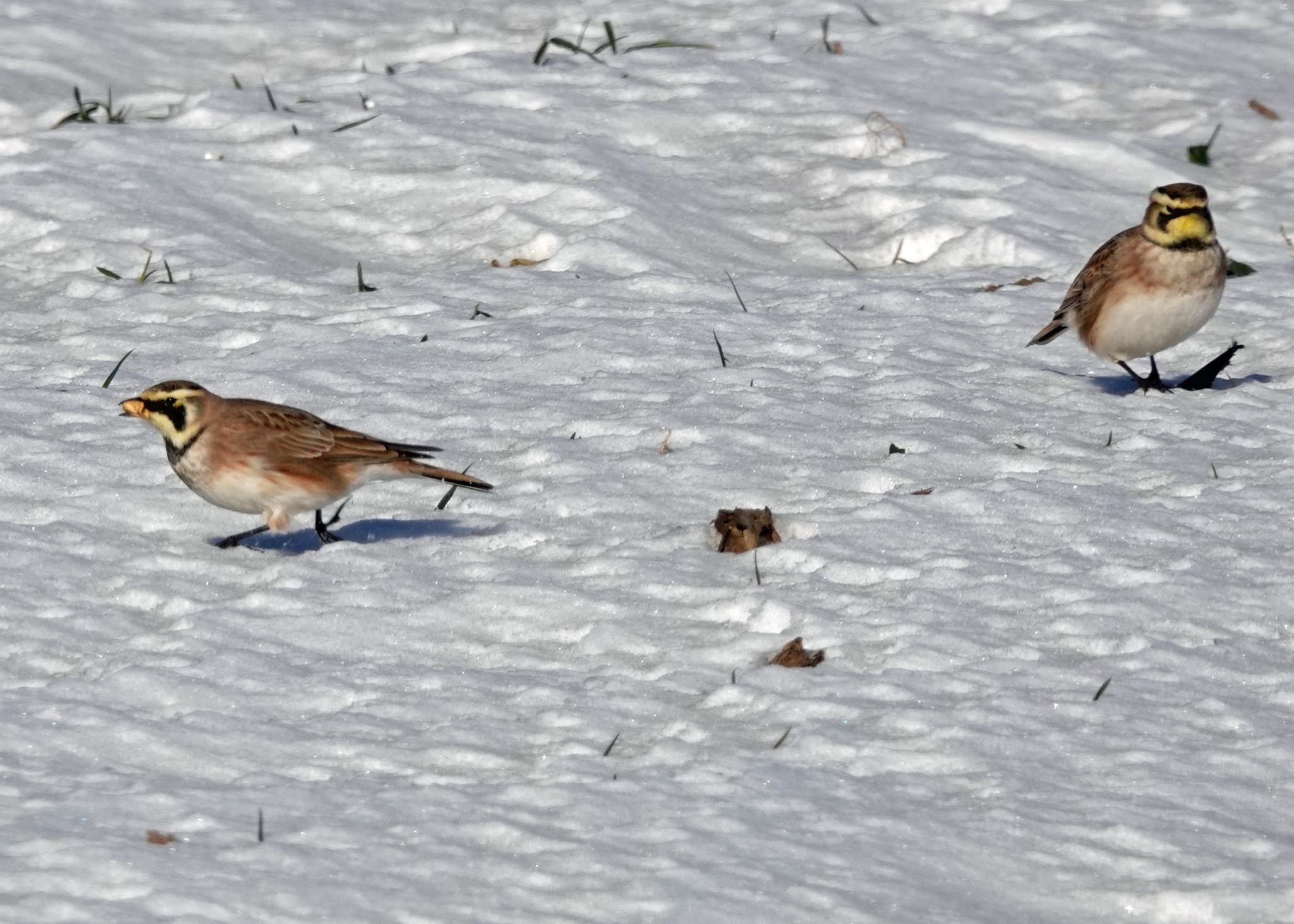
Plumage DetailsHorned Larks have a sandy brown back streaked with darker brown, a white belly, and a distinctive facial pattern. This includes a yellow face with a black mask extending from the bill to below the eye, a black breast band, and small, erectable black feather tufts ('horns') on the crown. The throat is typically yellow.
Vocalization / CallTheir vocalizations include a high-pitched, tinkling 'tsee-titi' call, often given in flight. The song is a series of high-pitched, jumbled notes and trills, typically delivered during a display flight.
Primary Dietomnivore
Primary Habitatsgrassland, tundra, agricultural fields, barren ground, alpine
Conservation Statusleast-concern
Geographic RangeThe Horned Lark has a widespread distribution across the Northern Hemisphere, breeding in arctic and alpine tundra, prairies, and open fields across North America, Europe, and Asia. Northern populations migrate south for winter, while southern populations may be resident.
Identifying Featuresblack 'horn' feather tufts, yellow face with black mask, black breast band, ground-dwelling behavior, long hind claw
Description
The Horned Lark is a small, ground-dwelling songbird known for its distinctive black 'horns' or feather tufts on its head. It forages on open ground, often in barren or sparsely vegetated areas, moving with a characteristic walk or run.