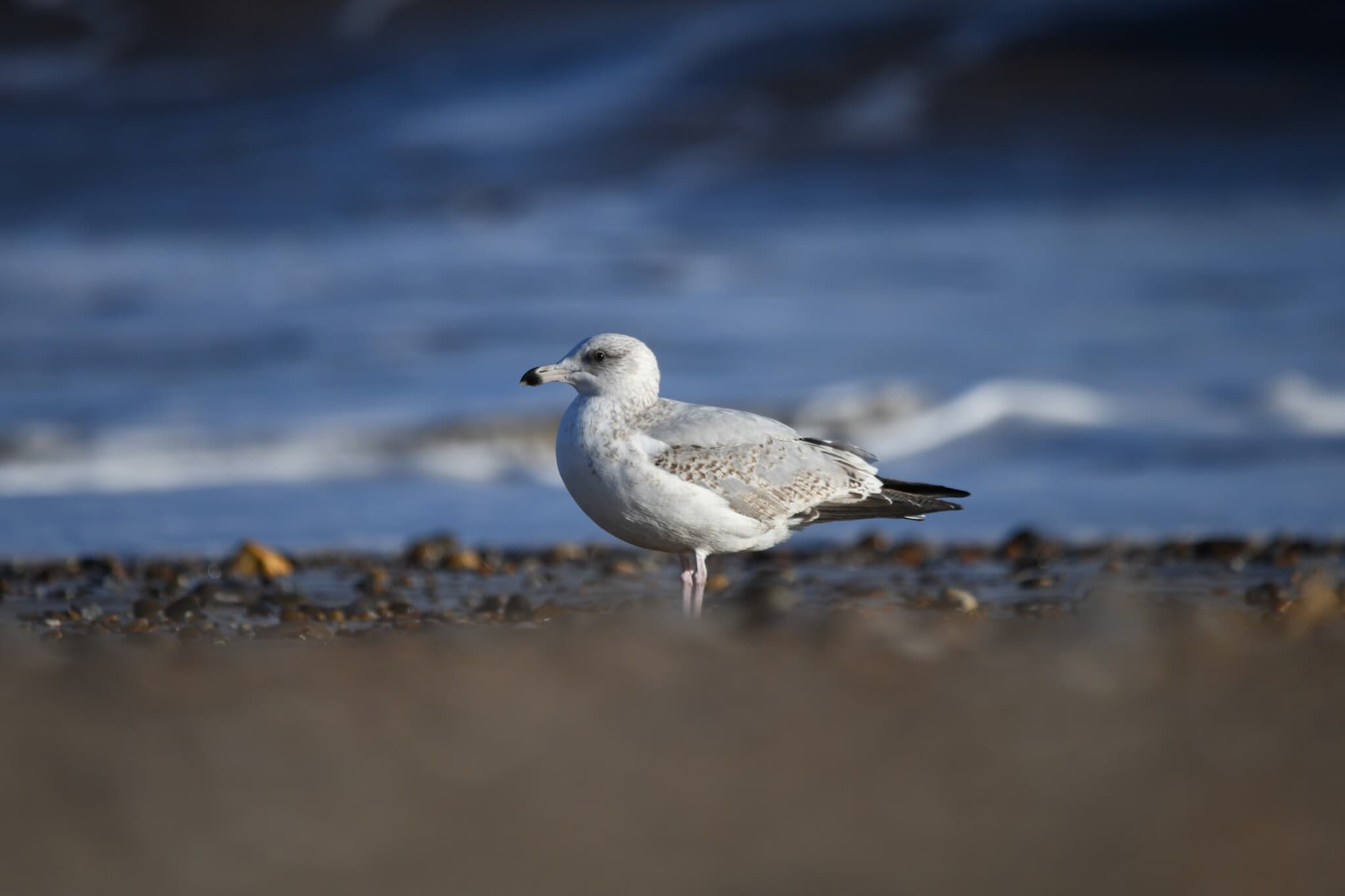
Herring Gull
Image: Luca Hoad (cc-by-nc)
NameHerring Gull
Common NameHerring Gull
Scientific NameLarus argentatus
FamilyLaridae
Wingspan (cm)144
Length (cm)61
Weight (g)1175
Plumage DetailsAdults have a white head and underparts, a grey back, and black wingtips with white spots. Their bill is yellow with a red spot on the lower mandible, and legs are pink. Juveniles and immatures, as seen in the image, are mottled brown and grey with a dark bill and dark legs, gradually acquiring adult plumage over 3-4 years.
Vocalization / CallKnown for a variety of loud, raucous calls, including a distinctive 'kyow-kyow-kyow' or 'gull-gull-gull' alarm call, and a long, drawn-out 'yee-ow' call.
Primary Dietomnivore
Primary Habitatscoastal areas, beaches, harbors, lakes, rivers, farmlands, urban areas
Conservation Statusleast-concern
Geographic RangeWidespread across the Northern Hemisphere, breeding in North America, Europe, and Asia, often migrating south for winter.
Identifying Featureslarge size, grey back (adults), white head and underparts (adults), yellow bill with red spot (adults), pink legs (adults), mottled brown/grey plumage (juveniles), dark bill and legs (juveniles)
Description
The Herring Gull is a large and adaptable gull species commonly found along coastlines and inland waters. Juveniles, like the one pictured, display a mottled brown and grey plumage, which gradually transitions to the adult's classic white and grey over several years. They are opportunistic feeders, often seen scavenging.