Greater Sand-Plover
NameGreater Sand-Plover
Common NameGreater Sand-Plover
Scientific NameCharadrius leschenaultii
FamilyCharadriidae
Wingspan (cm)58
Length (cm)23.5
Weight (g)100
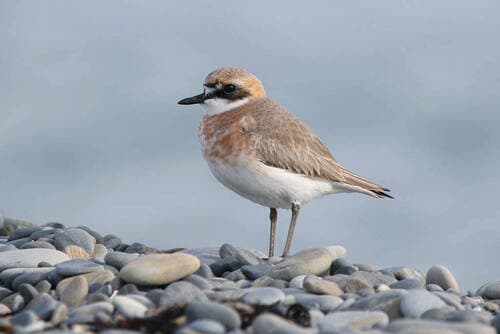
Plumage DetailsIn breeding plumage, adults display a white forehead, a broad black mask extending from the lores through the eye, and a prominent rufous-orange breast band. The upperparts are sandy brown, contrasting with white underparts. Non-breeding birds are duller, lacking the black mask and rufous breast band, appearing mostly sandy brown above and white below.
Vocalization / CallIts vocalizations typically include a short, sharp 'chip' or 'kip' call, and sometimes a trilling 'prrrp'.
Primary Dietinsectivore
Primary Habitatscoastal, wetland
Conservation Statusleast-concern
Geographic RangeBreeds in arid and semi-arid regions of Central Asia, including Turkey, Iran, and the Central Asian steppes. It winters extensively along coastlines from East Africa, across the Arabian Peninsula, South Asia, Southeast Asia, and down to Australia.
Identifying FeaturesRelatively large size for a plover, Stout body and thick bill, Long legs, Prominent black mask in breeding plumage, Rufous breast band in breeding plumage, Sandy brown upperparts and white underparts
Description
The Greater Sand-Plover is a medium-sized plover with a relatively stout body and a short, thick bill. It is typically found foraging on sandy beaches and mudflats, often running and stopping to pick up prey.