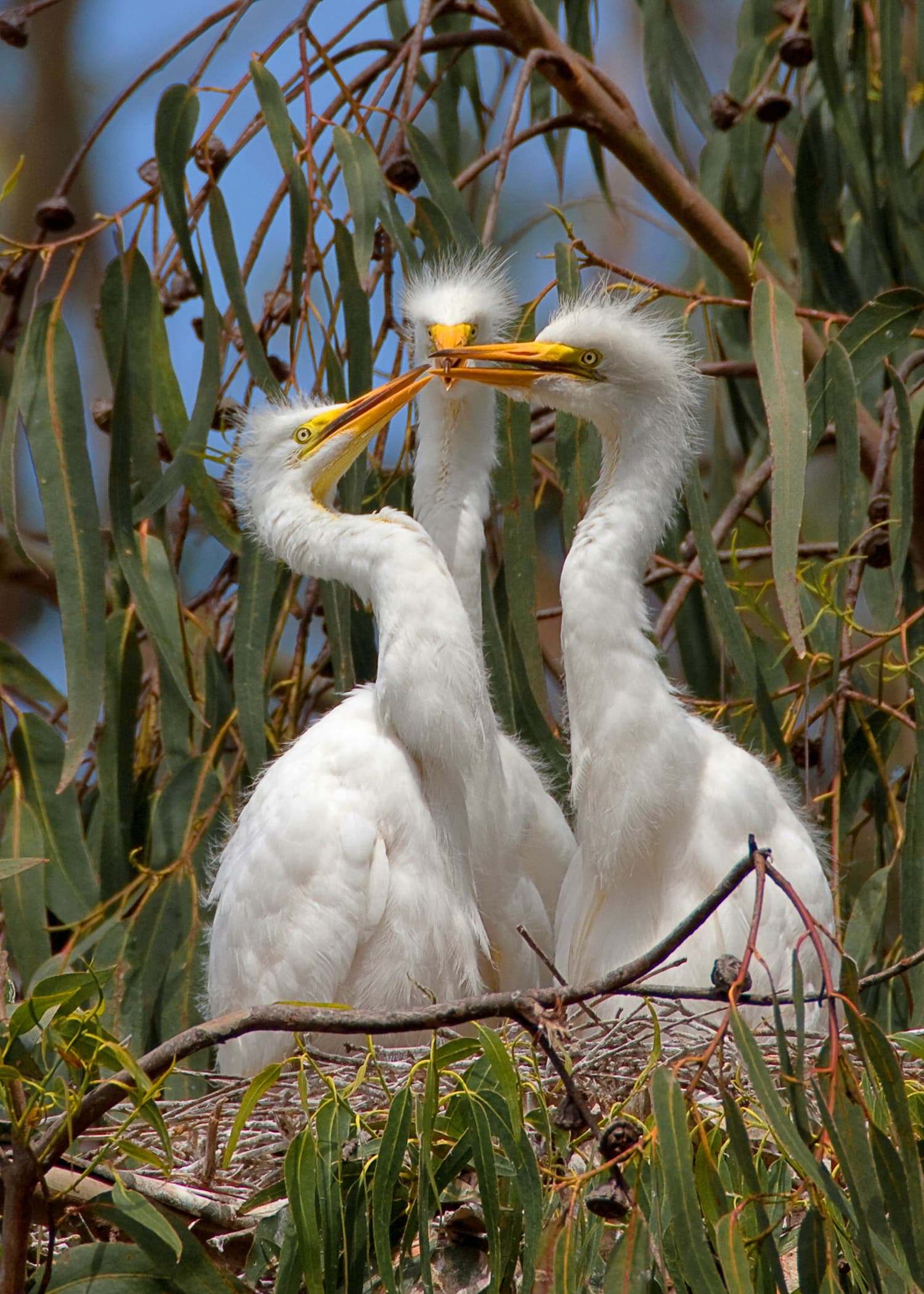
Great Egret
Image: <a rel="nofollow" class="external text" href="https://www.flickr.com/people/72825507@N00">Mike Baird</a> from Morro Bay, USA (CC BY 2.0)
NameGreat Egret
Common NameGreat Egret
Scientific NameArdea alba
FamilyArdeidae
Wingspan (cm)145
Length (cm)90
Weight (g)1000
Plumage DetailsAdults have entirely white plumage. The bill is typically yellow, turning orange at the base during the breeding season. Legs and feet are black. During breeding, adults develop long, delicate plumes on their back.
Vocalization / CallGenerally silent, but can emit a low, harsh croak or guttural 'carr-carr-carr' call, especially when disturbed or around the nest.
Primary Dietpiscivore
Primary Habitatswetlands, marshes, swamps, lakes, ponds, rivers, coastal areas, estuaries
Conservation Statusleast-concern
Geographic RangeNearly cosmopolitan, found in temperate and tropical regions across the Americas, Europe, Africa, and Asia.
Identifying Featureslarge size, all-white plumage, long S-shaped neck, long black legs and feet, yellow bill (non-breeding), orange bill base (breeding), lacy dorsal plumes (breeding)
Description
The Great Egret is a large, elegant white heron with a long, S-curved neck and long black legs. It is a patient hunter, often standing motionless in shallow water before striking at fish and other aquatic prey with its sharp bill.