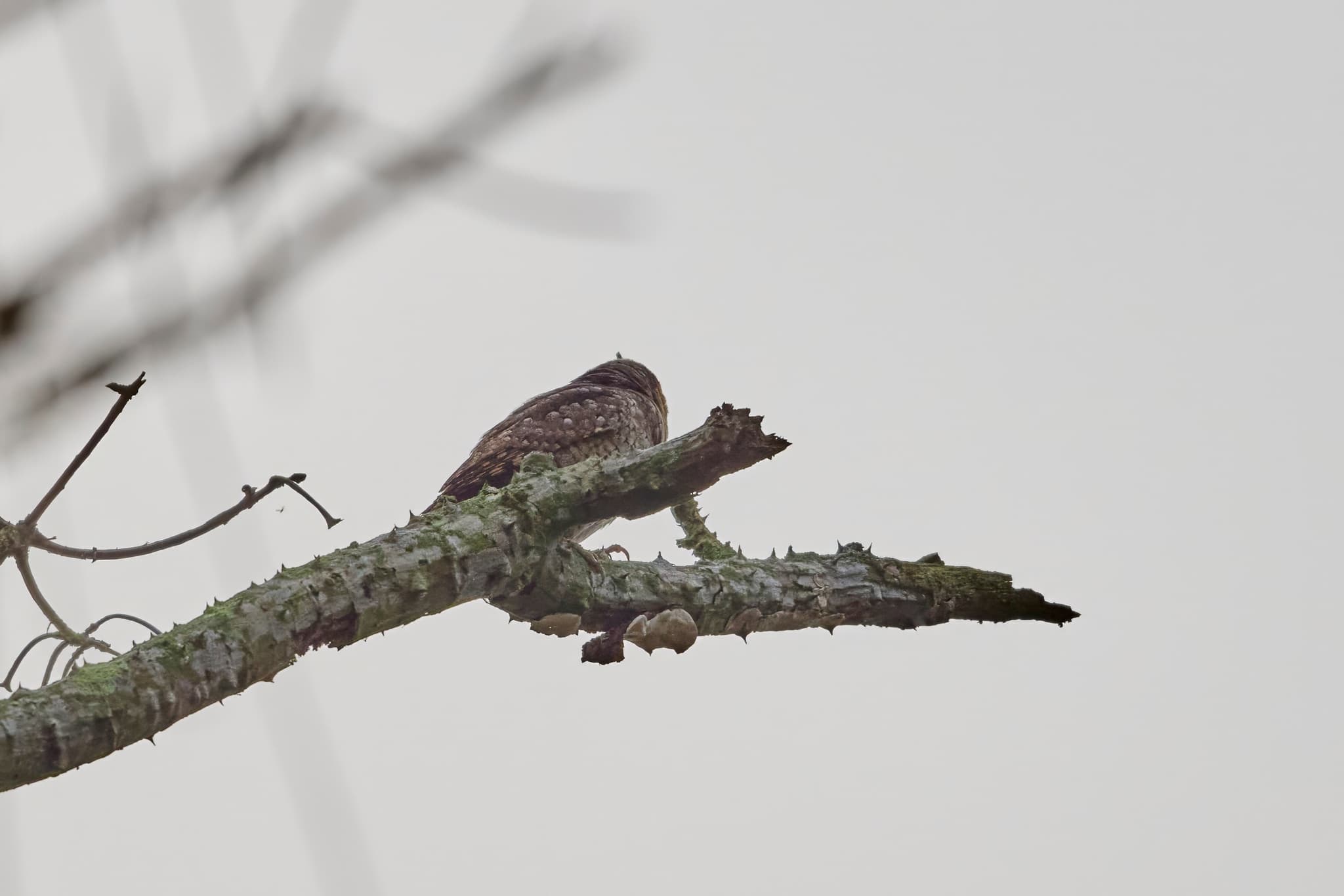
Eurasian Wryneck
Image: Yinglun Li (cc-by-nc)
NameEurasian Wryneck
Common NameEurasian Wryneck
Scientific NameJynx torquilla
FamilyPicidae
Wingspan (cm)25
Length (cm)17
Weight (g)40
Plumage DetailsIts plumage is intricately patterned with shades of grey, brown, rufous, and black, featuring fine streaks, bars, and spots across its back, wings, and underparts. A prominent dark stripe runs from behind the eye down the side of the neck, and a darker central stripe often extends down the back.
Vocalization / CallThe call is a distinctive, high-pitched, repetitive 'que-que-que-que' or 'tew-tew-tew-tew', often described as kestrel-like, especially when alarmed or during breeding season.
Primary Dietinsectivore
Primary Habitatsopen woodland, orchards, parks, gardens, heathland, scattered trees
Conservation Statusleast-concern
Geographic RangeBreeds across most of temperate Europe and Asia, from Great Britain eastward to Japan. It is a migratory species, wintering in tropical Africa and South Asia.
Identifying Featurescryptic, bark-like plumage, ability to twist head almost 180 degrees (wryneck display), long, extensible tongue for ant-eating, horizontal posture on branches, distinctive 'que-que-que' call, lacks stiff tail feathers typical of other woodpeckers
Description
The Eurasian Wryneck is a small, cryptic member of the woodpecker family, known for its mottled brown and grey plumage that provides excellent camouflage against tree bark. It is famous for its unique defensive display, twisting its head and neck almost 180 degrees, resembling a snake.