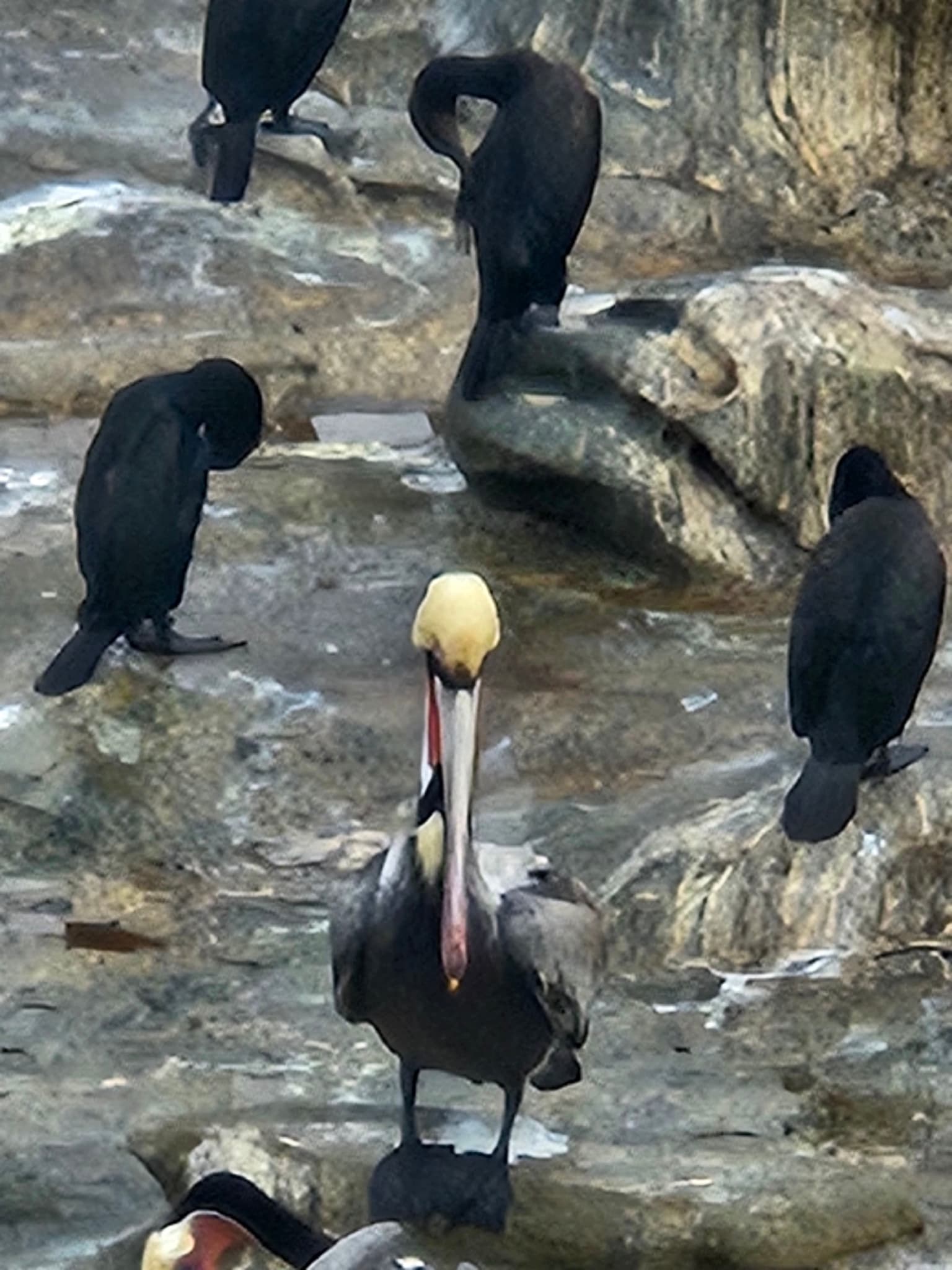
Brown Pelican
Image: Juan (cc-by-nc)
NameBrown Pelican
Common NameBrown Pelican
Scientific NamePelecanus occidentalis
FamilyPelecanidae
Wingspan (cm)200
Length (cm)120
Weight (g)3500
Plumage DetailsAdults have a dark gray-brown body, a white head and neck with a yellowish wash on the crown and nape, and a reddish-brown stripe down the back of the neck. The bill is grayish with a reddish or orange tinge, and the pouch is dark. Juveniles are duller, mostly brown with a pale belly.
Vocalization / CallGenerally silent away from breeding colonies. At colonies, they produce low grunts, croaks, and hisses, especially during courtship or when disturbed.
Primary Dietpiscivore
Primary Habitatscoastal, marine, estuaries, lagoons, beaches, piers, rocky islands
Conservation Statusleast-concern
Geographic RangeFound along the coasts of North and South America, from Nova Scotia and British Columbia south to the Amazon River mouth and Chile. They are non-migratory in most of their range but northern populations may move south in winter.
Identifying FeaturesLarge size, Dark body with pale head and neck (adults), Very long bill with a large, expandable gular pouch, Plunge-diving fishing method, Often seen in flocks along coastlines
Description
The Brown Pelican is a large coastal waterbird known for its distinctive plunge-diving technique to catch fish. It possesses a massive bill with a large throat pouch used for scooping prey. These social birds are often seen in flocks along coastlines.