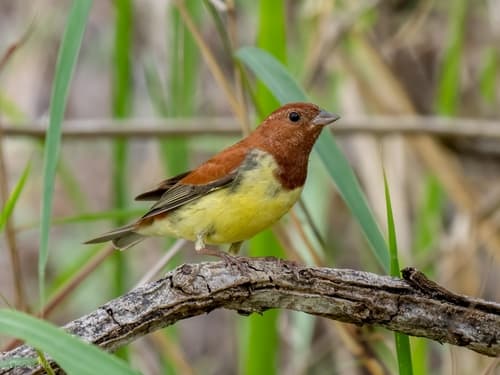
Chestnut Bunting
NameChestnut Bunting
Common NameChestnut Bunting
Scientific NameEmberiza rutila
FamilyEmberizidae
Wingspan (cm)21
Length (cm)14.5
Weight (g)19
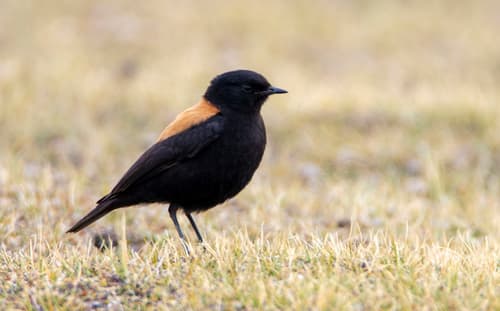
Plumage DetailsBreeding males have a rich chestnut head, throat, breast, and upperparts, contrasting sharply with bright yellow underparts. The wings are olive-brown with some chestnut wash. Females and immatures are duller, with streaked brown upperparts and yellowish underparts, lacking the distinct chestnut of the male.
Vocalization / CallIts call is a sharp 'tsip' or 'chip'. The song is a clear, high-pitched, somewhat hurried series of notes, often described as 'tsee-tsee-tsee-tsee-tsee-tsee-tsee'.
Primary Dietomnivore
Primary Habitatsforest, grassland
Conservation Statusleast-concern
Geographic RangeBreeds across eastern Siberia and parts of northeastern Asia. Winters primarily in Southeast Asia, including southern China, Indochina, and parts of the Malay Peninsula.
Identifying FeaturesChestnut head and upperparts (male), Bright yellow underparts (male), Small size, Conical bill
Description
The Chestnut Bunting is a small passerine known for its striking plumage, particularly in breeding males. It typically forages on the ground or in low vegetation, feeding on seeds and insects.