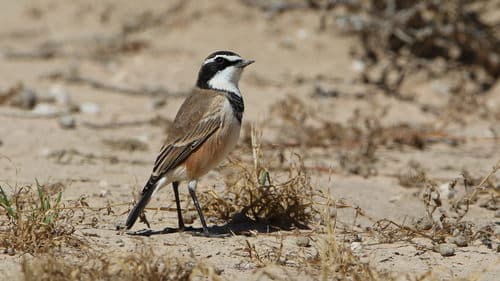
Capped Wheatear
NameCapped Wheatear
Common NameCapped Wheatear
Scientific NameOenanthe pileata
FamilyMuscicapidae
Wingspan (cm)28
Length (cm)18
Weight (g)30
Plumage DetailsAdult males have a distinctive black cap, a prominent white supercilium, and a broad black eye-stripe extending to a black breast band. The throat and belly are white, with rufous-buff flanks. The back and wings are sandy brown, and the tail is black with white outer feathers and a white rump.
Vocalization / CallVocalizations include a harsh 'chak-chak' alarm call and a melodious, warbling song often delivered from a perch or in a display flight.
Primary Dietinsectivore
Primary Habitatsgrassland, desert
Conservation Statusleast-concern
Geographic RangeEndemic to Southern Africa, found across South Africa, Lesotho, Eswatini, Namibia, Botswana, and parts of Angola, Zambia, and Zimbabwe.
Identifying FeaturesBlack cap, White supercilium, Black breast band, Rufous flanks, White rump, Black and white tail pattern
Description
The Capped Wheatear is a medium-sized passerine bird known for its striking black and white head pattern. It is typically found foraging on the ground in open, arid, and semi-arid habitats across Southern Africa.