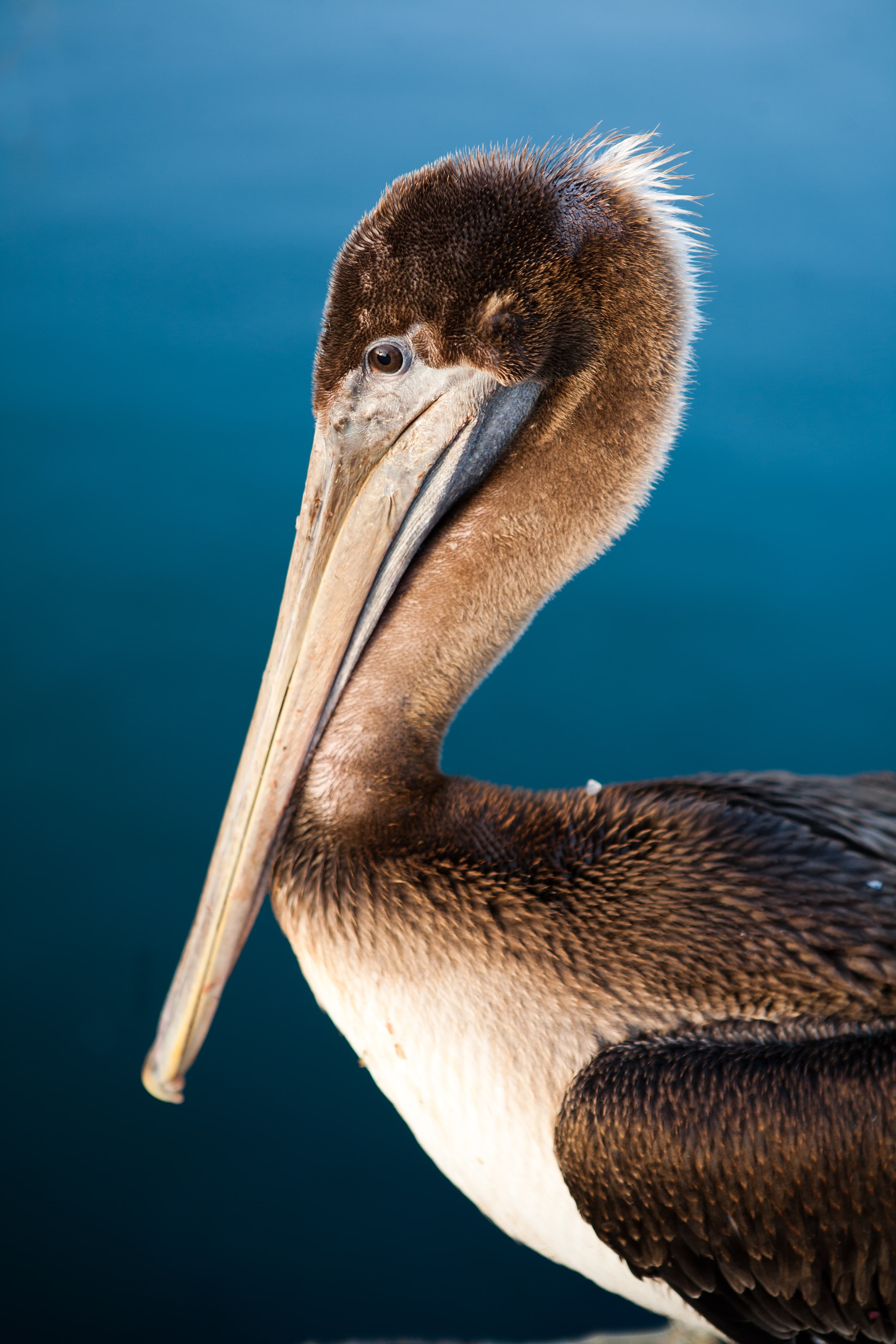
Brown Pelican
Image: <a href="//commons.wikimedia.org/wiki/User:Tomascastelazo" title="User:Tomascastelazo">Tomascastelazo</a> (CC BY-SA 3.0)
NameBrown Pelican
Common NameBrown Pelican
Scientific NamePelecanus occidentalis
FamilyPelecanidae
Wingspan (cm)203.2
Length (cm)114.3
Weight (g)3600
Plumage DetailsJuveniles, like the one pictured, have a dark brown head and neck, a dark brown body, and a white belly. Adults exhibit a white head with a yellowish wash on the crown, a dark brown hindneck, and a dark brown body with a white stripe down the neck.
Vocalization / CallBrown Pelicans are generally silent, especially away from nesting colonies. When vocal, they produce low grunts and croaks, particularly during breeding or when disturbed.
Primary Dietpiscivore
Primary Habitatscoastal marine, estuaries, lagoons, harbors, beaches, mangroves
Conservation Statusleast-concern
Geographic RangeFound along the coasts of North and South America, from Nova Scotia south to the mouth of the Amazon River, and along the Pacific coast from British Columbia south to Chile.
Identifying Featureslarge size, long bill with large gular pouch, plunge-diving feeding behavior, dark brown body (adults and juveniles), pale belly (juveniles), white head/neck with dark hindneck (adults)
Description
The Brown Pelican is a large, coastal seabird characterized by its distinctive long bill and expandable gular pouch. Unlike other pelican species, it feeds by plunge-diving headfirst into the water to catch fish. These social birds are often seen flying in V-formations or single lines along coastlines.