White-sided Flowerpiercer
NameWhite-sided Flowerpiercer
Common NameWhite-sided Flowerpiercer
Scientific NameDiglossa albilatera
FamilyThraupidae
Wingspan (cm)19
Length (cm)13.5
Weight (g)12
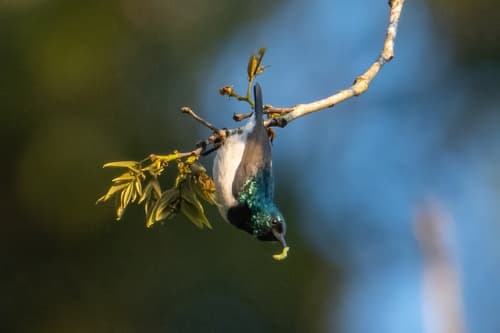
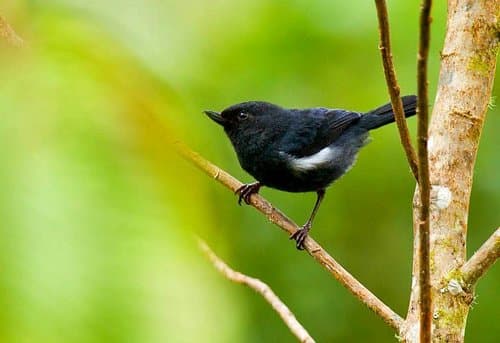
Plumage DetailsAdult males are glossy blue-black over most of the body, contrasting sharply with a prominent white patch on the flanks. The bill is black, slender, and distinctly upturned with a hooked tip. Females are duller, typically olive-brown above and paler, somewhat streaked below, often lacking or having a much less distinct white flank patch.
Vocalization / CallTheir vocalizations include thin, high-pitched 'tseet' or 'tsip' calls. The song is a simple, high-pitched series of clear, often repetitive whistles.
Primary Dietnectarivore
Primary Habitatsforest, mountain
Conservation Statusleast-concern
Geographic RangeFound in the Andes Mountains of South America, ranging from western Venezuela, through Colombia and Ecuador, to northern Peru. They typically inhabit montane cloud forests and forest edges at elevations between 1,500 and 3,000 meters.
Identifying FeaturesSmall size (approx. 13-14 cm), Distinctive upturned, hooked bill, Glossy blue-black plumage with white flank patch (males), Olive-brown plumage (females), Behavior of piercing flower bases for nectar
Description
A small, active tanager found in high-altitude Andean forests. Males are striking with glossy blue-black plumage and a distinctive white flank patch, while females are duller olive-brown. They are known for their specialized upturned, hooked bill used to pierce flower bases to access nectar.