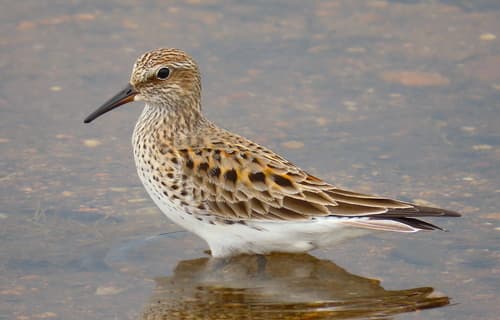
White-rumped Sandpiper
NameWhite-rumped Sandpiper
Common NameWhite-rumped Sandpiper
Scientific NameCalidris fuscicollis
FamilyScolopacidae
Wingspan (cm)39.5
Length (cm)19
Weight (g)52.5
Plumage DetailsUpperparts are dark brown with rufous or buff feather edges, creating a scaled pattern. The head and breast are streaky brown, contrasting with a clean white belly and undertail coverts. A key identifying feature is the white rump, often visible in flight. The bill is dark and relatively short with a slight droop, and the legs are dark.
Vocalization / CallIts vocalization is typically a thin, squeaky 'jeet' or 'tseet' call, often given in flight.
Primary Dietinsectivore
Primary Habitatstundra, wetland, coastal
Conservation Statusleast-concern
Geographic RangeBreeds in the high Arctic of Canada and Alaska. Undertakes one of the longest migrations of any shorebird, wintering in southern South America, primarily Patagonia and Tierra del Fuego. Migrates through eastern North America, Central America, and the Caribbean.
Identifying FeaturesWhite rump (diagnostic), Long wings extending beyond the tail when perched, Streaky breast contrasting with clean white belly, Relatively short, slightly drooped dark bill
Description
The White-rumped Sandpiper is a small shorebird with a distinctive white rump, long wings, and a streaky brown plumage. It forages actively in shallow water and mudflats, probing for invertebrates with its short, slightly drooped bill.