Western Capercaillie
NameWestern Capercaillie
Common NameWestern Capercaillie
Scientific NameTetrao urogallus
FamilyPhasianidae
Wingspan (cm)95
Length (cm)70
Weight (g)4000
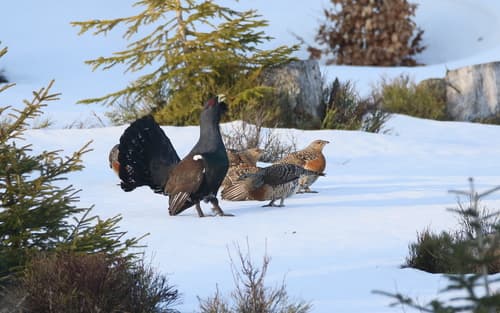
Plumage DetailsMales have iridescent dark green breast feathers, a dark brown back, a white patch on the shoulder, and a long, fanned black tail. They also feature a prominent red wattle above each eye. Females are smaller, with mottled brown, black, and rufous plumage, providing excellent camouflage in their forest habitat.
Vocalization / CallDuring the breeding season, males perform a distinctive 'lekking' display, producing a series of unique vocalizations including knocking, popping, and gurgling sounds, often culminating in a 'cork-pulling' sound.
Primary Dietomnivore
Primary Habitatsconiferous forest, mixed forest
Conservation Statusleast-concern
Geographic RangeFound across northern Europe and Asia, from Scandinavia and Russia through parts of Central Europe, extending eastwards into Siberia.
Identifying FeaturesVery large size (especially males), Male's dark, iridescent plumage and fanned tail display, Prominent red wattle above male's eye, Female's mottled brown and rufous camouflage, Distinctive lekking behavior and calls
Description
The Western Capercaillie is the largest member of the grouse family, known for its impressive size and the male's elaborate courtship display. Males are significantly larger and darker than females, which exhibit cryptic brown plumage for camouflage.