West Indian Whistling-Duck
NameWest Indian Whistling-Duck
Common NameWest Indian Whistling-Duck
Scientific NameDendrocygna arborea
FamilyAnatidae
Wingspan (cm)83
Length (cm)53
Weight (g)1000
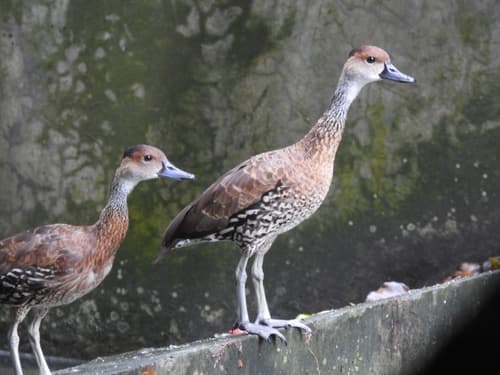
Plumage DetailsThe plumage is predominantly brown, with a dark cap extending from the crown to the nape. The face and throat are pale buff, contrasting with the dark cap. The breast and flanks are heavily barred with dark brown and white, giving a scaled appearance, while the back is darker brown. The bill is dark with a bluish base, and the legs are long and grey.
Vocalization / CallKnown for its distinctive, clear, three-note whistling call, often given at night or when disturbed. The calls are typically described as 'pee-wee-ooo' or 'whi-whi-whio'.
Primary Dietomnivore
Primary Habitatswetland, forest, coastal
Conservation Statusendangered
Geographic RangeEndemic to the Caribbean, found in the Greater Antilles (Cuba, Jamaica, Hispaniola, Puerto Rico) and some of the northern Lesser Antilles (e.g., Antigua, Barbuda).
Identifying Featureslong neck, dark cap, pale face, heavily barred flanks, long grey legs, bluish bill base, nocturnal whistling call, arboreal perching
Description
This large, long-legged duck is characterized by its upright posture and nocturnal habits. It often perches in trees and feeds on a variety of plant matter and some invertebrates in wetland environments. Its distinctive whistling calls are often heard at night.