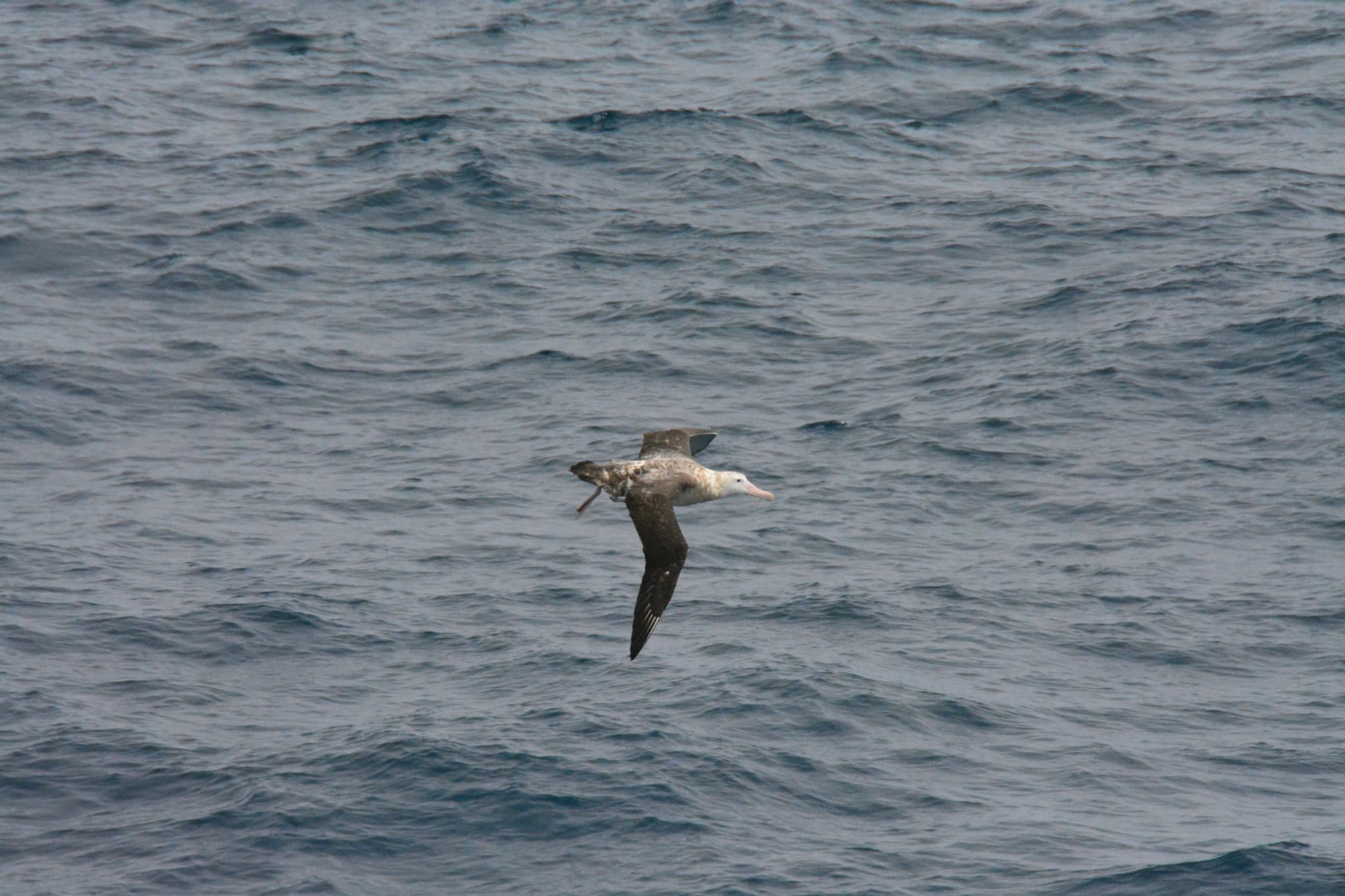
Wandering Albatross
Image: Andres de Miguel (cc-by-nc)
NameWandering Albatross
Common NameWandering Albatross
Scientific NameDiomedea exulans
FamilyDiomedeidae
Wingspan (cm)310
Length (cm)120
Weight (g)8750
Plumage DetailsAdults are predominantly white with black primary feathers and a variable amount of black on the upperwing, becoming whiter with age. Juveniles are much darker, mostly brown with a white face, gradually molting into whiter plumage over several years. The bird in the image appears to be a subadult with mottled brown and white plumage.
Vocalization / CallGenerally silent at sea, but produces a variety of grunts, gurgles, hisses, and bill-clapping sounds at breeding colonies, especially during courtship and territorial displays.
Primary Dietcarnivore
Primary Habitatspelagic, open ocean, remote islands (for breeding)
Conservation Statusvulnerable
Geographic RangeCircumpolar in the Southern Ocean, ranging from the Antarctic ice edge north to about 30°S, breeding on remote subantarctic islands such as South Georgia, Crozet, Kerguelen, and Macquarie.
Identifying Featureslargest wingspan of any living bird, massive size, long, pale pinkish bill with a dark tip, white body and head (adults), dark upperwings (adults, with varying amounts of white), juveniles are dark brown with a white face and gradually whiten with age
Description
The Wandering Albatross is a majestic, very large seabird renowned for its immense wingspan, allowing it to glide effortlessly over vast stretches of the open ocean. It spends most of its life at sea, only returning to remote islands to breed. This species exhibits a complex plumage maturation, with juveniles being much darker than the predominantly white adults.