Variable Wheatear
NameVariable Wheatear
Common NameVariable Wheatear
Scientific NameOenanthe picata
FamilyMuscicapidae
Wingspan (cm)28
Length (cm)15
Weight (g)17.5
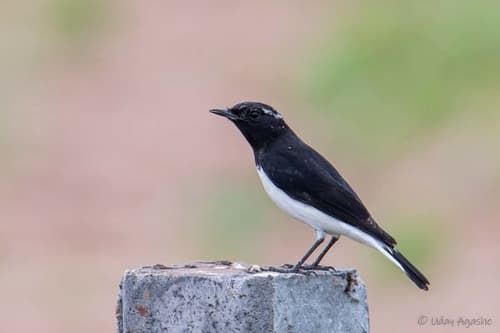
Plumage DetailsMales typically have black upperparts, wings, and central tail feathers. The underparts vary by morph: some have entirely black underparts, while others (like the one pictured) have a white belly and vent with a black throat and breast. A white supercilium or crown is often present, along with a prominent white rump and white outer tail feathers forming a distinct T-pattern. Females are duller, often brownish-grey.
Vocalization / CallVocalizations include harsh 'chak' or 'tack' notes. The song is a varied mix of whistles, trills, and sometimes mimicry of other birds.
Primary Dietinsectivore
Primary Habitatsdesert, grassland, mountain
Conservation Statusleast-concern
Geographic RangeBreeds from southeastern Turkey across the Middle East to Central Asia, including Iran, Afghanistan, Pakistan, Turkmenistan, Uzbekistan, and Tajikistan. It winters primarily in the Indian subcontinent and parts of the Arabian Peninsula.
Identifying FeaturesStriking black and white plumage (males), White supercilium or crown (variable), White rump and outer tail feathers with black central T-pattern, Upright posture on prominent perches, Frequent tail-flicking behavior
Description
The Variable Wheatear is a small, slender passerine known for its striking black and white plumage in males, which exhibit several morphs. It is an active insectivore, often seen perching prominently on rocks or low vegetation in arid and semi-arid environments, frequently flicking its tail.