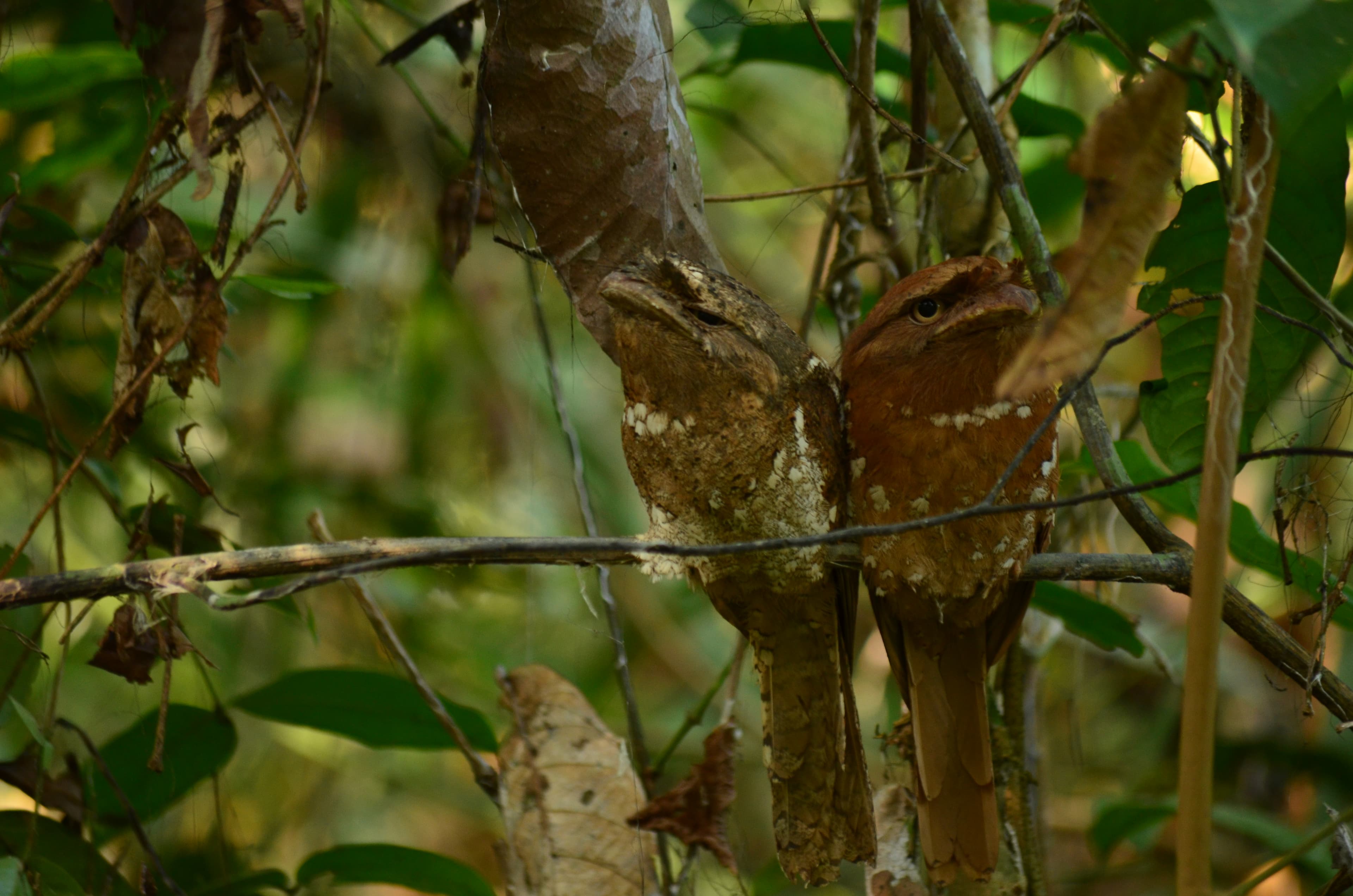
Sri Lanka Frogmouth
Image: <a href="//commons.wikimedia.org/w/index.php?title=User:Tellsiddu&action=edit&redlink=1" class="new" title="User:Tellsiddu (page does not exist)">Siddarth.P.Raj</a> (CC BY-SA 3.0)
NameSri Lanka Frogmouth
Common NameSri Lanka Frogmouth
Scientific NameBatrachostomus moniliger
FamilyPodargidae
Wingspan (cm)22
Length (cm)23
Weight (g)50
Plumage DetailsMales are generally greyish-brown, mottled and streaked with black and white, resembling tree bark. Females are rufous-brown, with similar cryptic patterns. Both sexes have white spots and a broad, flattened bill, often with bristles around the mouth.
Vocalization / CallKnown for soft, mournful hoots, often described as a series of 'who-who-who' or 'gok-gok-gok' calls, sometimes interspersed with chuckles or trills.
Primary Dietinsectivore
Primary Habitatstropical moist broadleaf forests, subtropical moist broadleaf forests, dense undergrowth, plantations
Conservation Statusleast-concern
Geographic RangeEndemic to the Western Ghats of southern India and Sri Lanka.
Identifying Featurescryptic plumage (bark-like or leaf-like), large, broad, flattened bill, large yellow eyes (though not clearly visible in this image), nocturnal habits, upright posture resembling a broken branch, bristles around the mouth
Description
The Sri Lanka Frogmouth is a nocturnal bird renowned for its exceptional camouflage, blending seamlessly with tree bark or dead leaves. It typically perches motionless during the day, relying on its cryptic plumage to avoid detection. These birds are insectivores, catching prey in flight or from a perch.