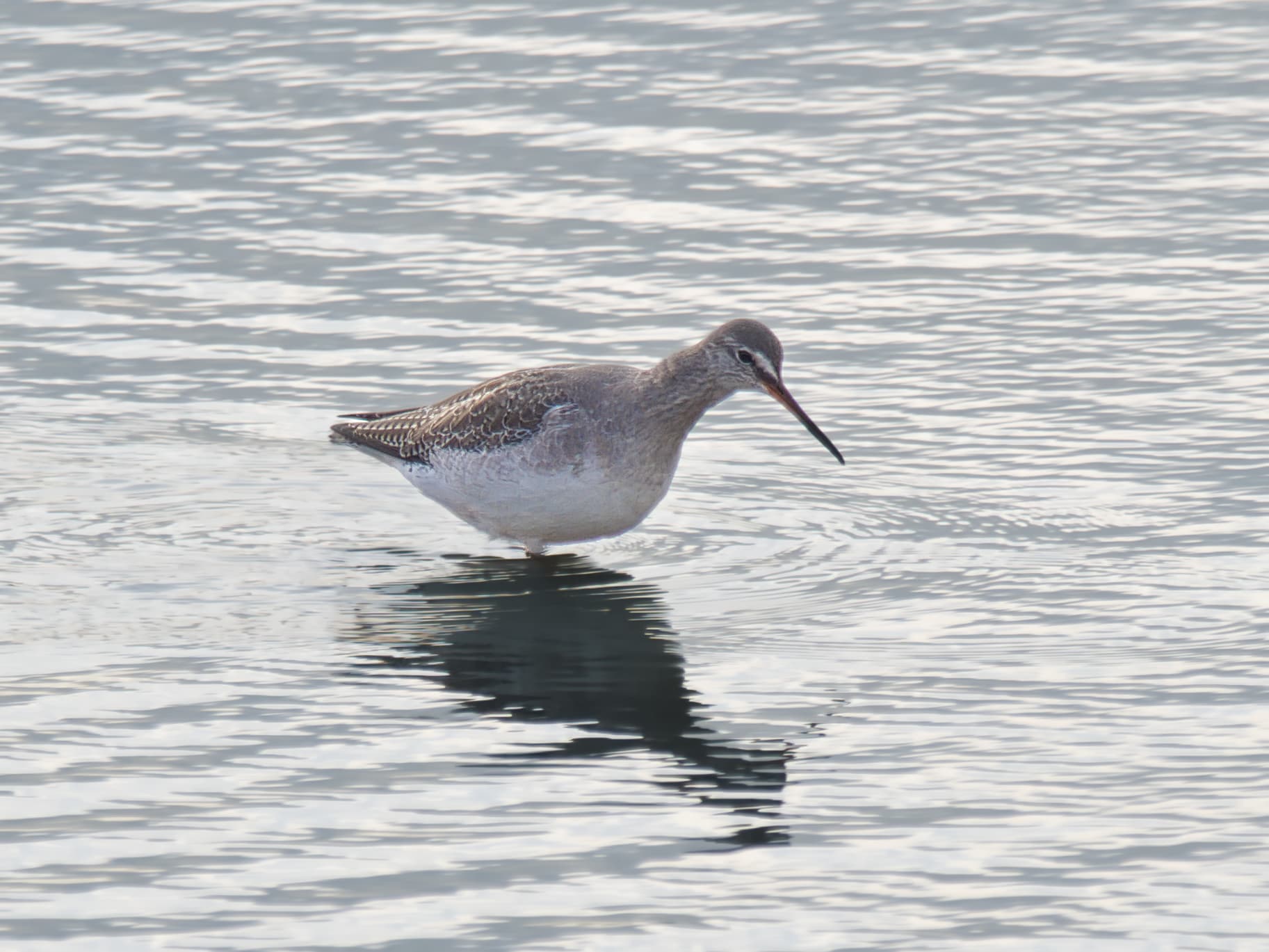
Spotted Redshank
Image: angus_w (cc-by-nc)
NameSpotted Redshank
Common NameSpotted Redshank
Scientific NameTringa erythropus
FamilyScolopacidae
Wingspan (cm)64
Length (cm)31
Weight (g)150
Plumage DetailsIn non-breeding plumage, the upperparts are grey-brown with fine white spotting, and the underparts are white. The head and neck are pale grey. The bill is long, slender, and dark, often with a reddish base in adults. Legs are typically dark red. In breeding plumage, the bird is predominantly black with prominent white spotting on the back and flanks.
Vocalization / CallA distinctive, clear, whistling 'tew-ee' or 'chu-eet' call, often given in flight. It also produces a rapid 'chip-chip-chip' alarm call when disturbed.
Primary Dietcarnivore
Primary Habitatswetlands, marshes, estuaries, mudflats, lakeshores, tundra
Conservation Statusleast-concern
Geographic RangeBreeds across the taiga and tundra zones of northern Eurasia. Winters extensively in coastal areas and inland wetlands from southern Europe and Africa to South Asia and Australia.
Identifying Featureslong slender bill (often reddish at base), long dark red legs, grey upperparts and white underparts in non-breeding plumage, striking black plumage with white spots in breeding plumage, distinctive whistling call, active foraging style in shallow water
Description
A medium-sized, elegant wader characterized by its long, slender bill and long legs. In non-breeding plumage, as seen here, it appears largely grey above and white below, often actively foraging in shallow water. This species undergoes a striking plumage change to black with white spotting during the breeding season.