Semipalmated Sandpiper
NameSemipalmated Sandpiper
Common NameSemipalmated Sandpiper
Scientific NameCalidris pusilla
FamilyScolopacidae
Wingspan (cm)37
Length (cm)14
Weight (g)25
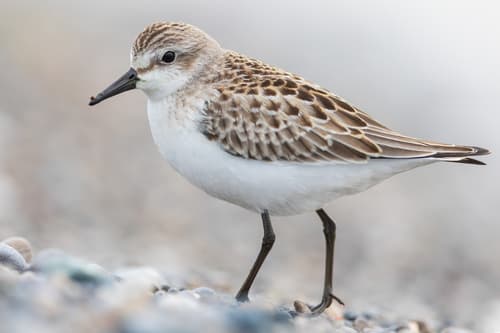
Plumage DetailsIn breeding plumage, the upperparts are mottled brown with rufous tones and dark streaking, especially on the crown and breast. Underparts are white. Non-breeding plumage is duller and grayer on the upperparts with less streaking. It has dark legs and a short, straight, relatively thick black bill.
Vocalization / CallIts typical call is a short, sharp 'chep' or 'krip' sound, often given in flight or when disturbed.
Primary Dietinsectivore
Primary Habitatstundra, coastal, wetland
Conservation Statusleast-concern
Geographic RangeBreeds in the Arctic tundra of North America. Migrates extensively, wintering along coastal areas from the southern United States through Central America and extensively in South America.
Identifying FeaturesSmall size, Dark legs, Short, straight, relatively thick black bill, Brownish-streaked upperparts, White underparts, Slightly webbed (semipalmated) feet
Description
The Semipalmated Sandpiper is a small, active shorebird often seen foraging on mudflats and beaches. It breeds in the Arctic tundra and undertakes long migrations to coastal areas of North and South America. This species is known for its distinctive dark legs and short, straight bill.