Snow Bunting
NameSnow Bunting
Common NameSnow Bunting
Scientific NamePlectrophenax nivalis
FamilyCalcariidae
Wingspan (cm)30
Length (cm)16
Weight (g)33
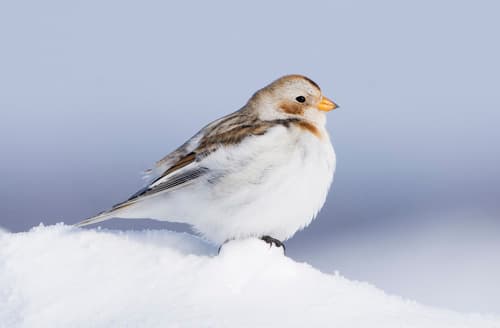
Plumage DetailsIn winter plumage (as depicted), both sexes have extensive white underparts and white wing patches. The back is streaked brown, and the head and breast show a rusty-brown wash, particularly on the ear coverts and sides of the breast. Breeding males become much whiter overall, with a pure white head and underparts, and black on the back and wingtips. The bill is yellow with a dark tip in winter, turning black in breeding season.
Vocalization / CallIts song is a melodious, trilling warble, often delivered from a perch or in flight. Calls include a soft 'tew' or 'tew-tew' and a dry, rattling 'prrrrt'.
Primary Dietomnivore
Primary Habitatstundra, grassland, coastal, mountain
Conservation Statusleast-concern
Geographic RangeBreeds in the high Arctic across North America, Greenland, Europe, and Asia. Winters south to temperate regions of North America, Europe, and central Asia, often found in open fields, coastal areas, and mountain foothills.
Identifying FeaturesExtensive white plumage, especially on underparts and wings, Brown streaked back, Rusty wash on head and breast (winter plumage), Yellow bill with dark tip (winter), Often seen in snowy, open landscapes, Distinctive white wing patches in flight
Description
The Snow Bunting is a hardy, medium-sized passerine bird, often found in open, cold environments. It is known for its striking white and brown plumage, which provides excellent camouflage in snowy landscapes. These birds are typically seen foraging on the ground, often in flocks during winter.