Sandhill Crane
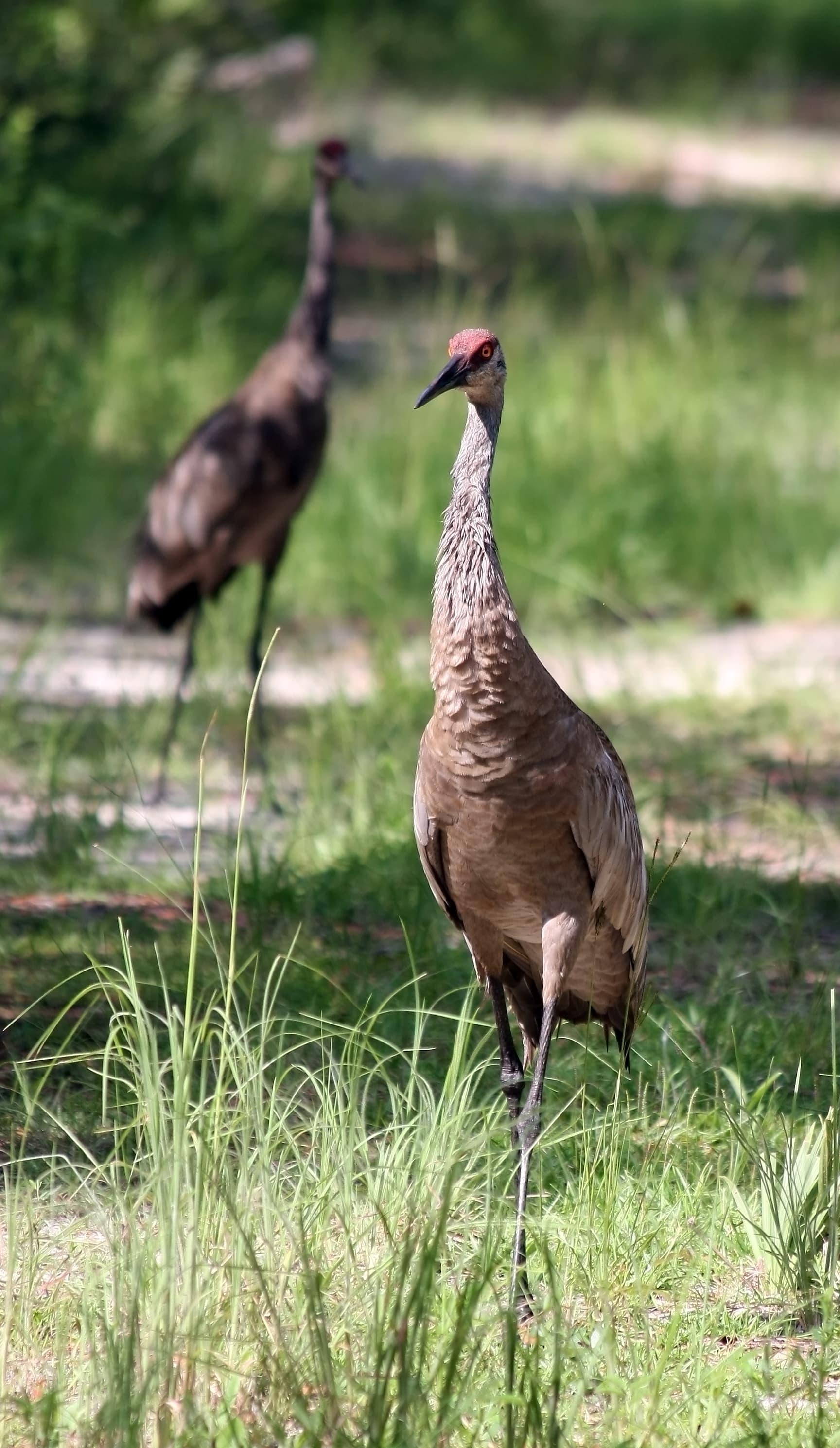
Image: Ianaré Sévi (CC BY-SA 3.0)
NameSandhill Crane
Common NameSandhill Crane
Scientific NameAntigone canadensis
FamilyGruidae
Wingspan (cm)185
Length (cm)105
Weight (g)4750
Plumage DetailsAdults typically have gray plumage, often stained rusty-brown from iron-rich mud, with a prominent bare red crown and forehead, and white cheeks. Juveniles are browner overall, lacking the distinct red crown, which develops as they mature.
Vocalization / CallLoud, rattling, trumpeting calls, often described as a 'gar-oo-oo' sound, which can carry over long distances.
Primary Dietomnivore
Primary Habitatsgrassland, wetland
Conservation Statusleast-concern
Geographic RangeBreeds across North America (including Alaska, Canada, and parts of the US) and northeastern Siberia. Winters in the southern US, Mexico, and Cuba. The Florida subspecies is non-migratory.
Identifying FeaturesLarge size with long legs and neck, Gray body plumage (often rusty-stained), Distinctive bare red crown/forehead on adults, Loud, rattling, trumpeting call, Long, dark pointed bill
Description
The Sandhill Crane is a large, elegant bird characterized by its long legs and neck, and a distinctive bare red patch on its forehead. These omnivorous birds are known for their elaborate courtship dances and loud, rattling calls, often found foraging in wetlands and open fields.