Sage Grouse
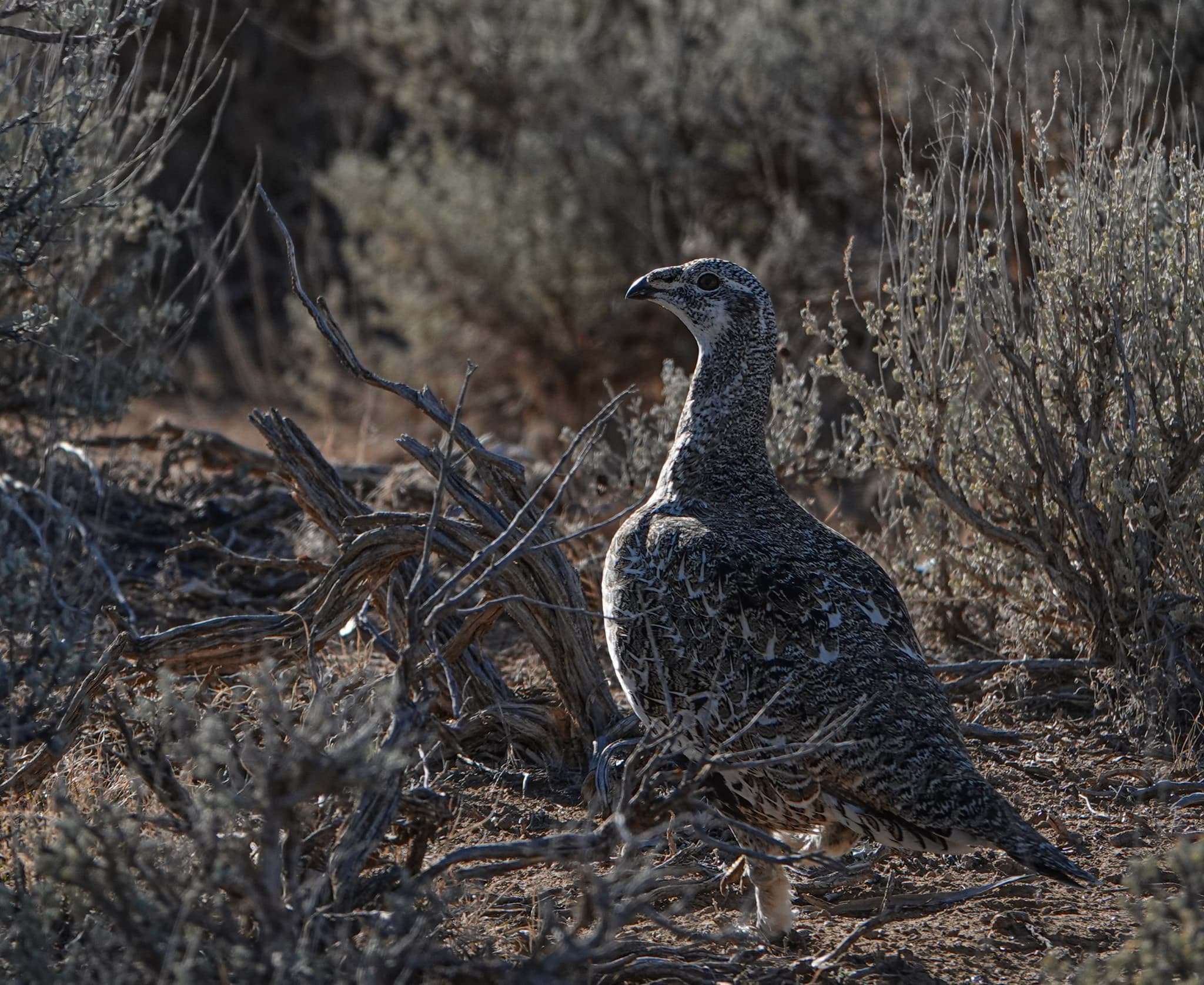
Image: Mark Otnes (cc-by-nc)
NameSage Grouse
Common NameGreater Sage-Grouse
Scientific NameCentrocercus urophasianus
FamilyPhasianidae
Wingspan (cm)75
Length (cm)62
Weight (g)2000
Plumage DetailsMottled gray-brown and white plumage with a distinct black belly patch. Males have a white ruff around the neck and two large, inflatable yellow air sacs on the chest, prominently displayed during courtship. Both sexes possess long, stiff, pointed tail feathers.
Vocalization / CallMales produce elaborate "booming" and "popping" sounds during their courtship display, generated by the inflation and deflation of their air sacs and wing movements. Females typically emit soft clucking or cackling calls.
Primary Dietomnivore
Primary Habitatsshrubland, grassland
Conservation Statusnear-threatened
Geographic RangeFound in arid and semi-arid sagebrush ecosystems across western North America, from southeastern Alberta and Saskatchewan south through Montana, Wyoming, Colorado, Utah, Nevada, Idaho, Oregon, and eastern Washington and California.
Identifying Featureslarge size, long pointed tail, mottled gray-brown plumage, black belly patch, sagebrush habitat, males' inflatable yellow air sacs (during display)
Description
The Greater Sage-Grouse is a large, ground-dwelling bird native to western North America, characterized by its plump body and long, pointed tail. Its cryptic plumage provides excellent camouflage within its sagebrush habitat, where it primarily forages. Males are known for their elaborate courtship displays involving inflatable air sacs.